July 19-26, 2026 - AirVenture 2026
Warbirds
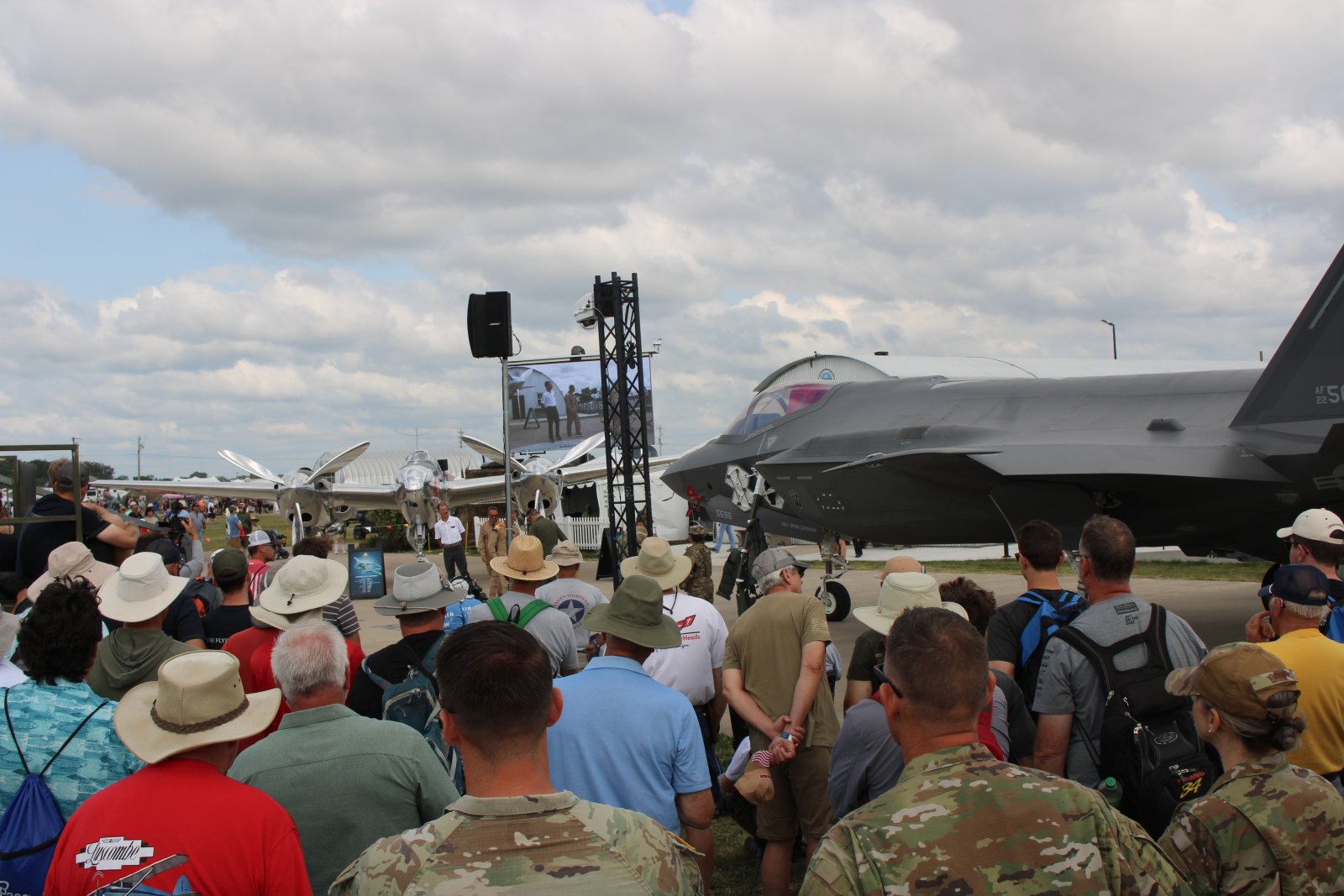
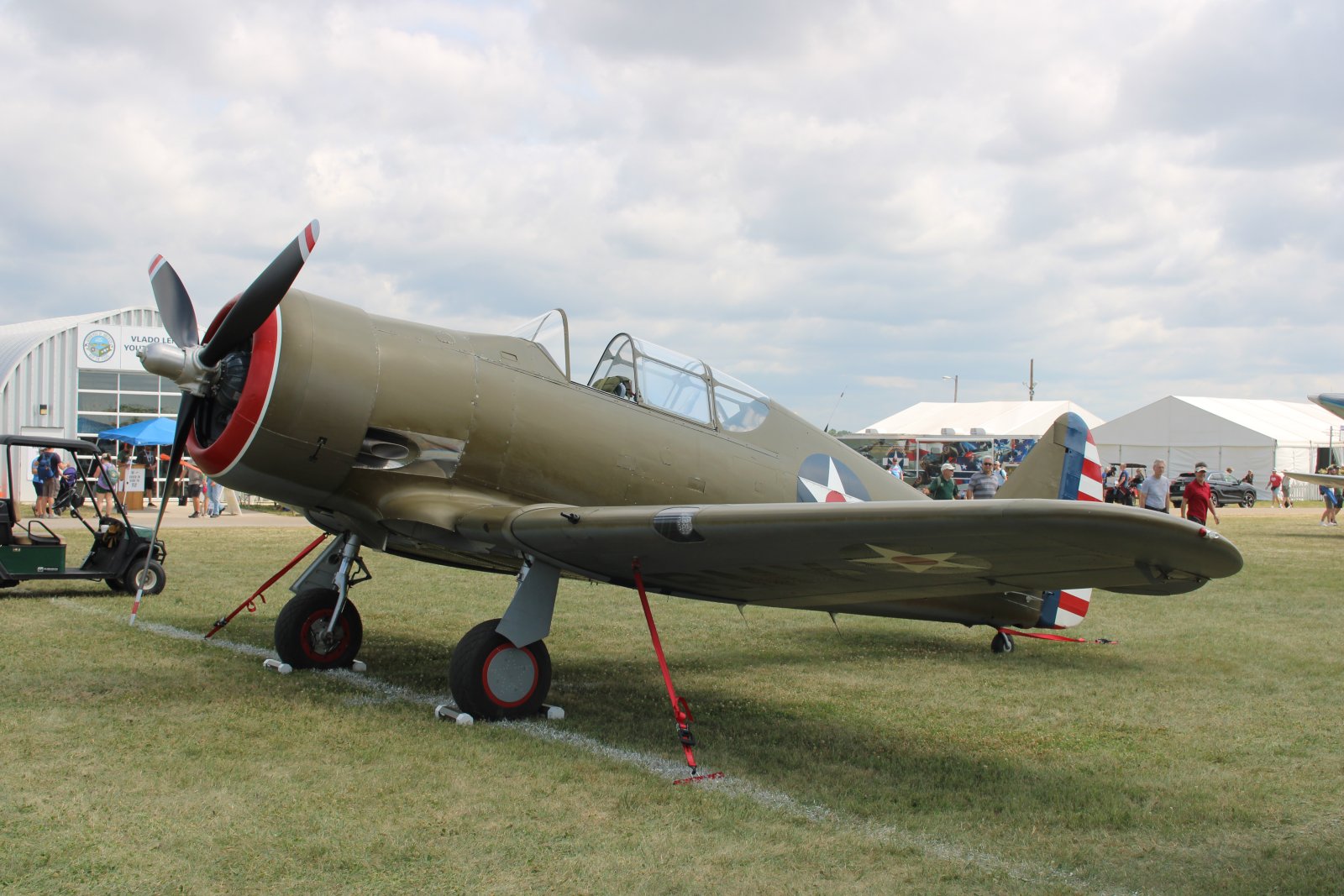
This is something you don't often see: a Bell P-63 KingCobra. It is operated by the Commemorative Air Force (CAF) Airbase Georgia at Atlanta Regional Airport-Falcon Field.
This particular aircraft, unlike most Kingcobras which went to the Soviet Union for combat service, was kept by Bell Aircraft for test and development work. In 1945, Bell transferred it to the NACA — the National Advisory Committee for Aeronautics, predecessor of NASA. It was flown from Moffett Field, California, where it participated in research work. After NACA finished with it, the aircraft was sold as surplus around July 1946. It became NX75488 and spent years in private ownership, doing relatively little flying. In 1975, it was acquired by what was then the Confederate Air Force, now the Commemorative Air Force. A restoration was begun in 1999, but didn't emerge as a flying airplane until 2017, now painted to represent its NACA career.
The Kingcobra was Bell's attempt to correct the shortcomings of the P-39 Airacobra.
Based on the preceding Bell P-39 Airacobra, the P-63's design incorporated suggestions from P-39 pilots and was superior to its predecessor in virtually all respects. The P-63 was not accepted for combat use by the United States Army Air Forces (USAAF). However, it was used during World War II by the Soviet Air Force, which had also been the most prolific user of the P-39.
The P-39 was unusual because its Allison V-1710 engine was mounted behind the cockpit, driving the propeller through a long extension shaft. That allowed Bell to put a 37-mm cannon in the nose, firing through the propeller hub. The arrangement gave the P-39 excellent visibility and concentrated its armament in the nose, but the airplane's performance suffered badly at high altitude. Bell's answer was essentially to make the Airacobra bigger, cleaner and more powerful. The result was initially designated XP-39E, then developed into the P-63 Kingcobra. It retained the P-39's mid-engine layout but had a substantially redesigned wing, fuselage and tail.
But by the time the Kingcobra was becoming available in quantity, the USAAF already had aircraft such as the P-47 Thunderbolt, P-38 Lightning and P-51 Mustang. The Mustang in particular was becoming an outstanding long-range fighter. So the USAAF didn't need the P-63 and never used the P-63 as a combat fighter. Some were used for training, but the overwhelming majority went overseas under Lend-Lease.
The Soviets loved the P-63's predecessor, the P-39 Airacobra. They found the Airacobra particularly effective in the kind of combat they were fighting: relatively low-altitude tactical air combat over the Eastern Front. The same characteristics that made the P-39 mediocre as a high-altitude Western European interceptor could make it very effective at low altitude. So when the Kingcobra appeared, the Soviets were interested.
Bell ultimately built 3,305 Kingcobras. The United States sent 2,456 of these to the Soviet Union—by far the largest user. Its heavy cannon armament made it useful against ground targets and armored vehicles, and Soviet pilots used the type for ground attack and "tank busting". Most of the Kingcobras flew to the Soviet Union via Alaska-Siberia (ALSIB) ferry route: Niagara Falls → Great Falls, Montana → Alaska → Siberia → Soviet Union. Approximately 5,000 P-39s and P-63s were ferried along the ALSIB route between September 1942 and September 1945. Free French forces received 300 P-63s..
The famous astronaut Frank Borman had and flew a P-63. Borman was a graduate of West Point, a USAF fighter pilot, an aeronautical engineer, a test pilot, commander of Gemini VII and commander of Apollo 8, the first mission to fly around the Moon. In 1996, after his retirement from NASA and Eastern Air Lines, Borman acquired a derelict Kingcobra. He commissioned Square One Aviation, Elmer Ward's restoration company in Chino, California, to bring the P-63 back to flying condition. It wasn't easy; the airplane had been sitting around for roughly 50 years, much of that time exposed to the elements. After roughly two years of restoration, the P-63 made its first flight on February 9, 1998. Borman didn't just put it in a museum; he flew it. In his late 60s. The restored P-63 appeared at EAA AirVenture Oshkosh in 1998. And won Warbird Grand Champion. Borman sold the airplane in September 2003. The registration remains N163FS although it doesn't appear to have flown in a long time.
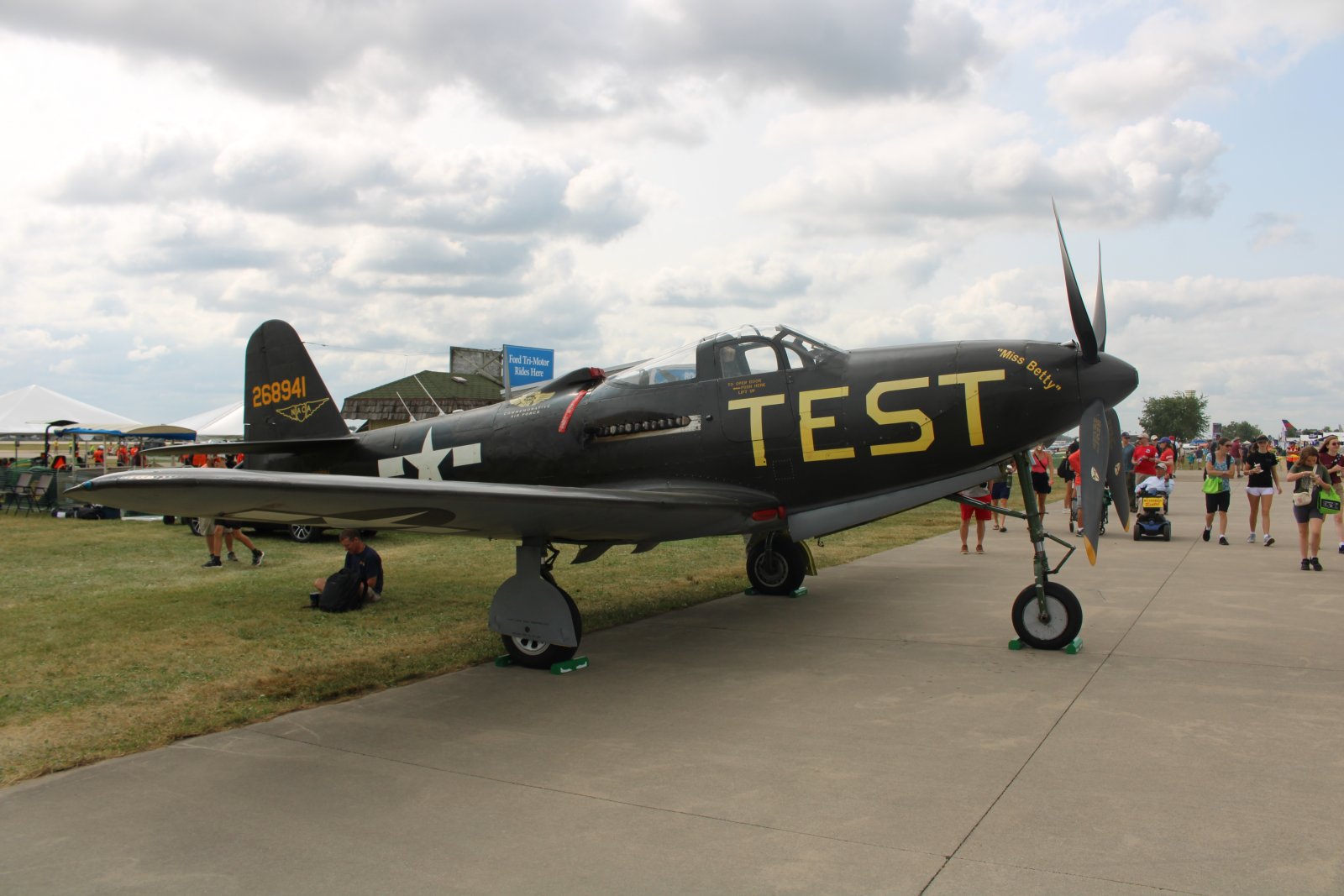
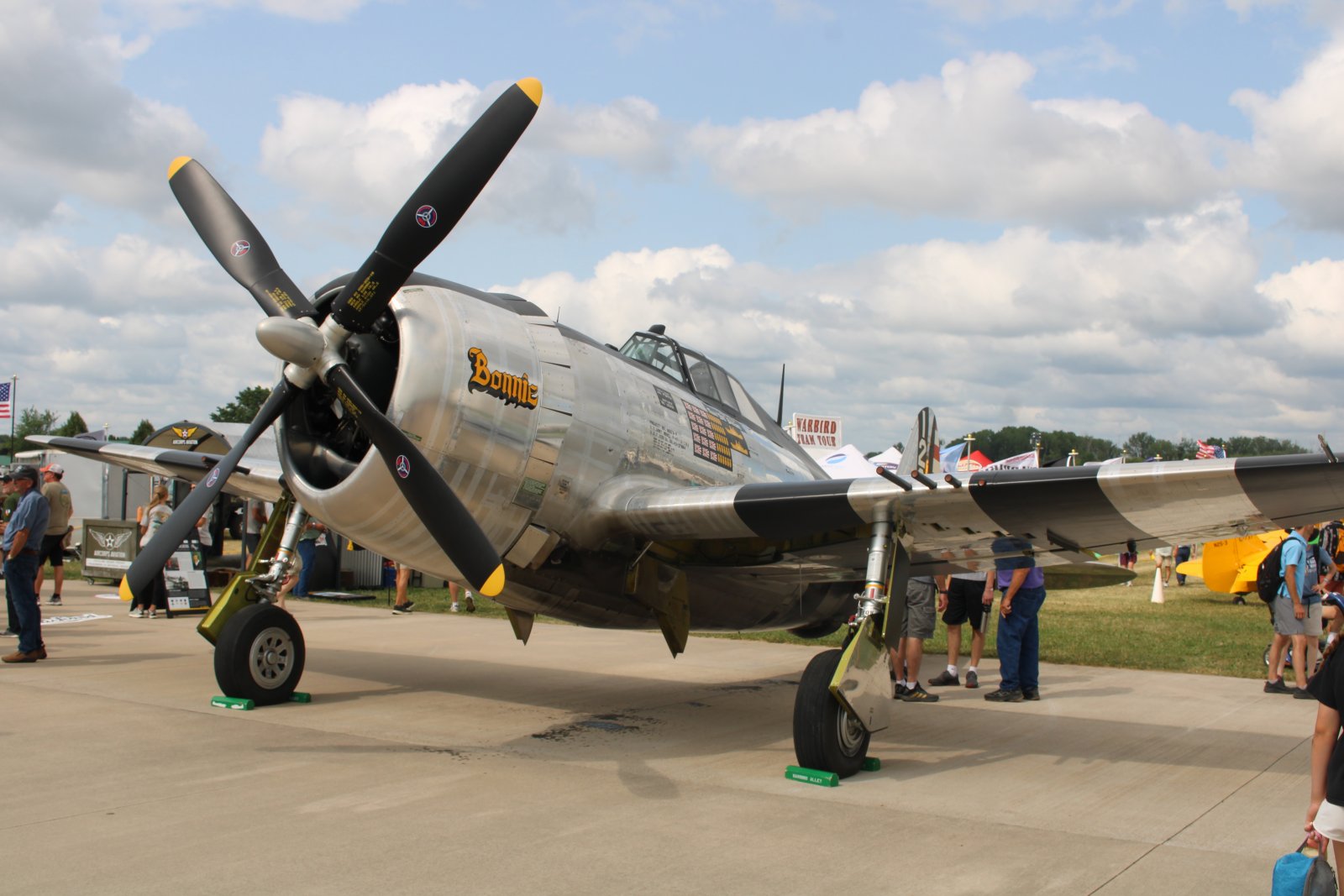
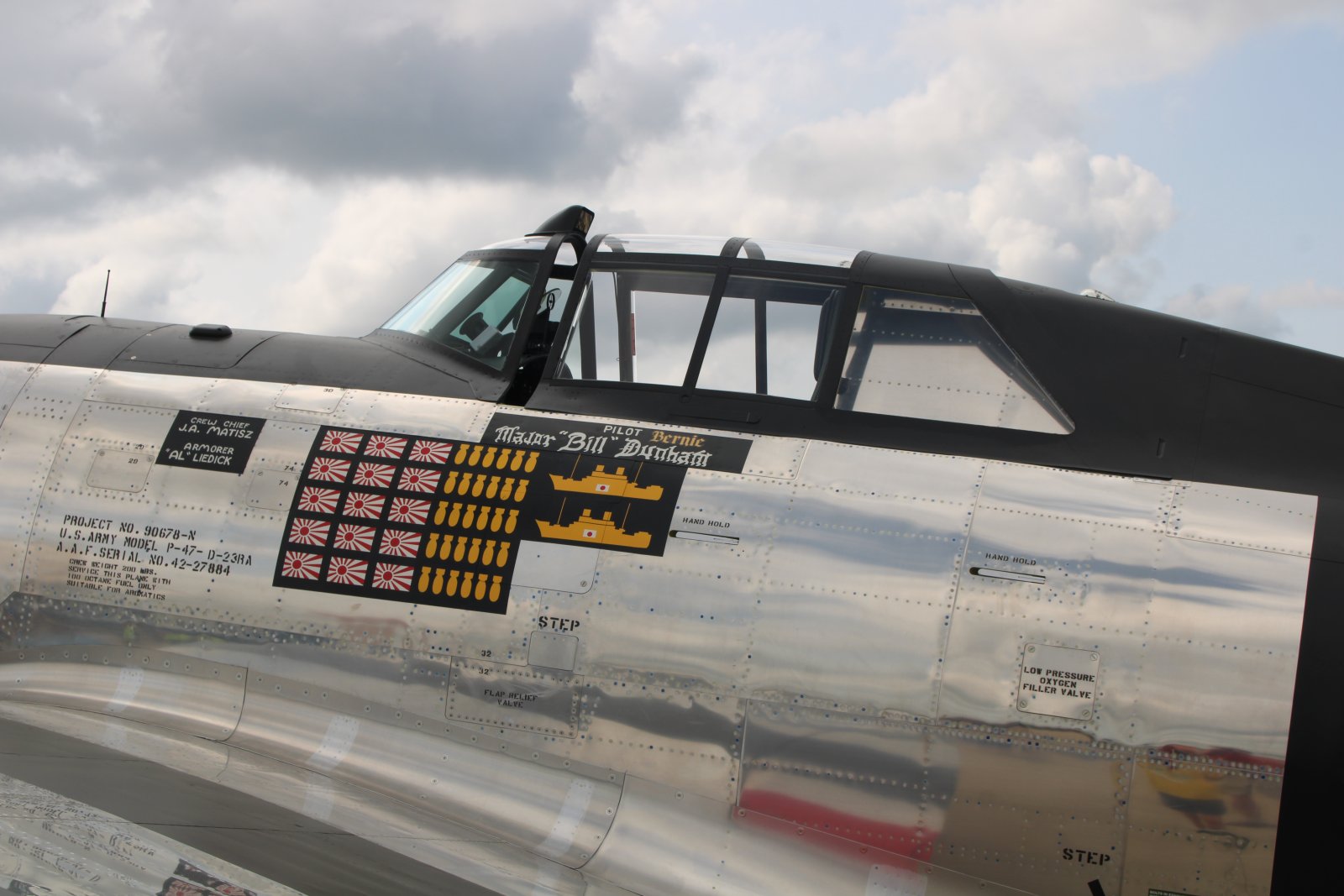
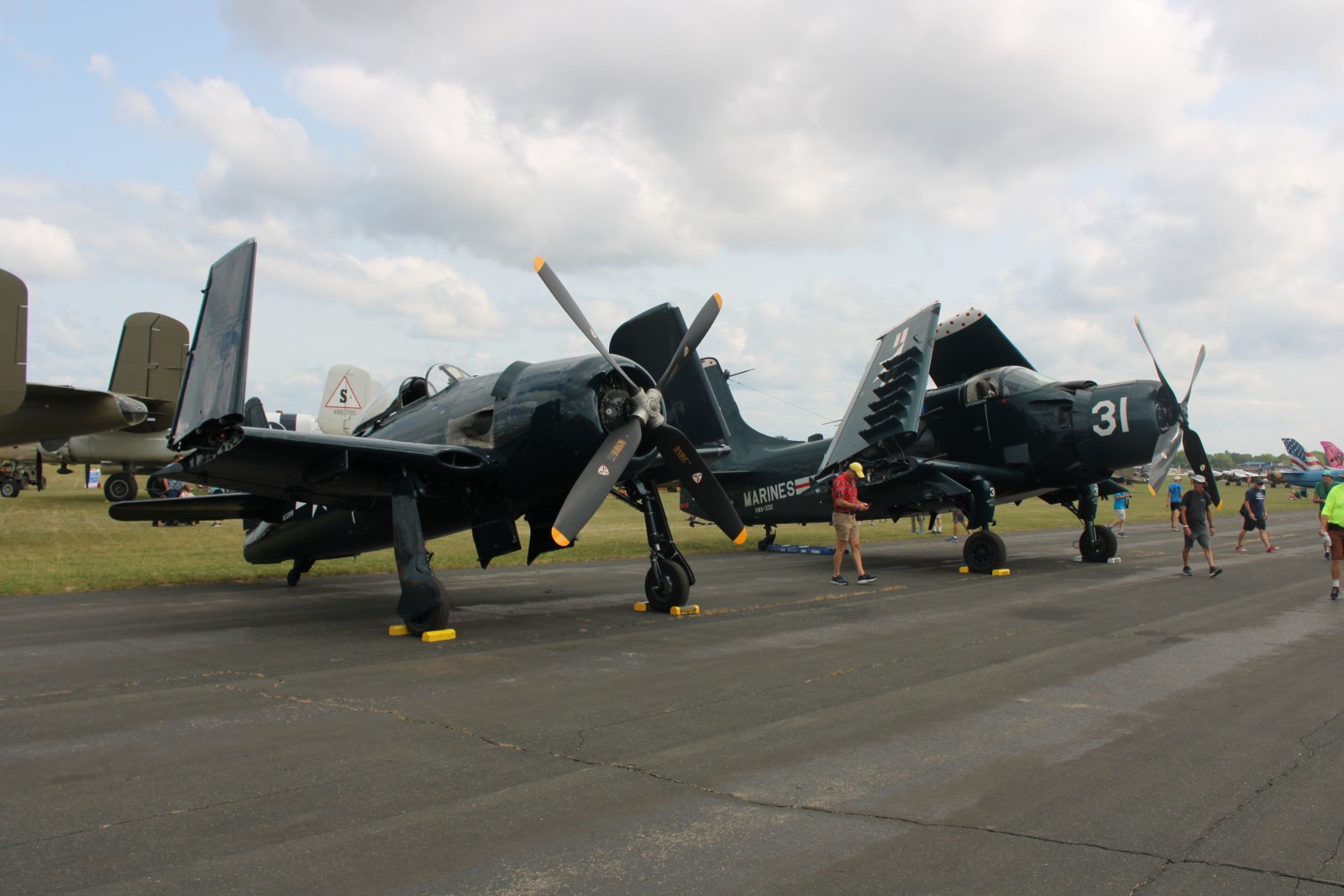
Two post-WWII Navy piston-engine, carrier-based aircraft: the F8F Bearcat and A1 Skyraider. The Skyraider was principally used as a close air support aircraft; in this capacity, it was extensively used during both the Korean War and Vietnam War, as well as multiple other conflicts.
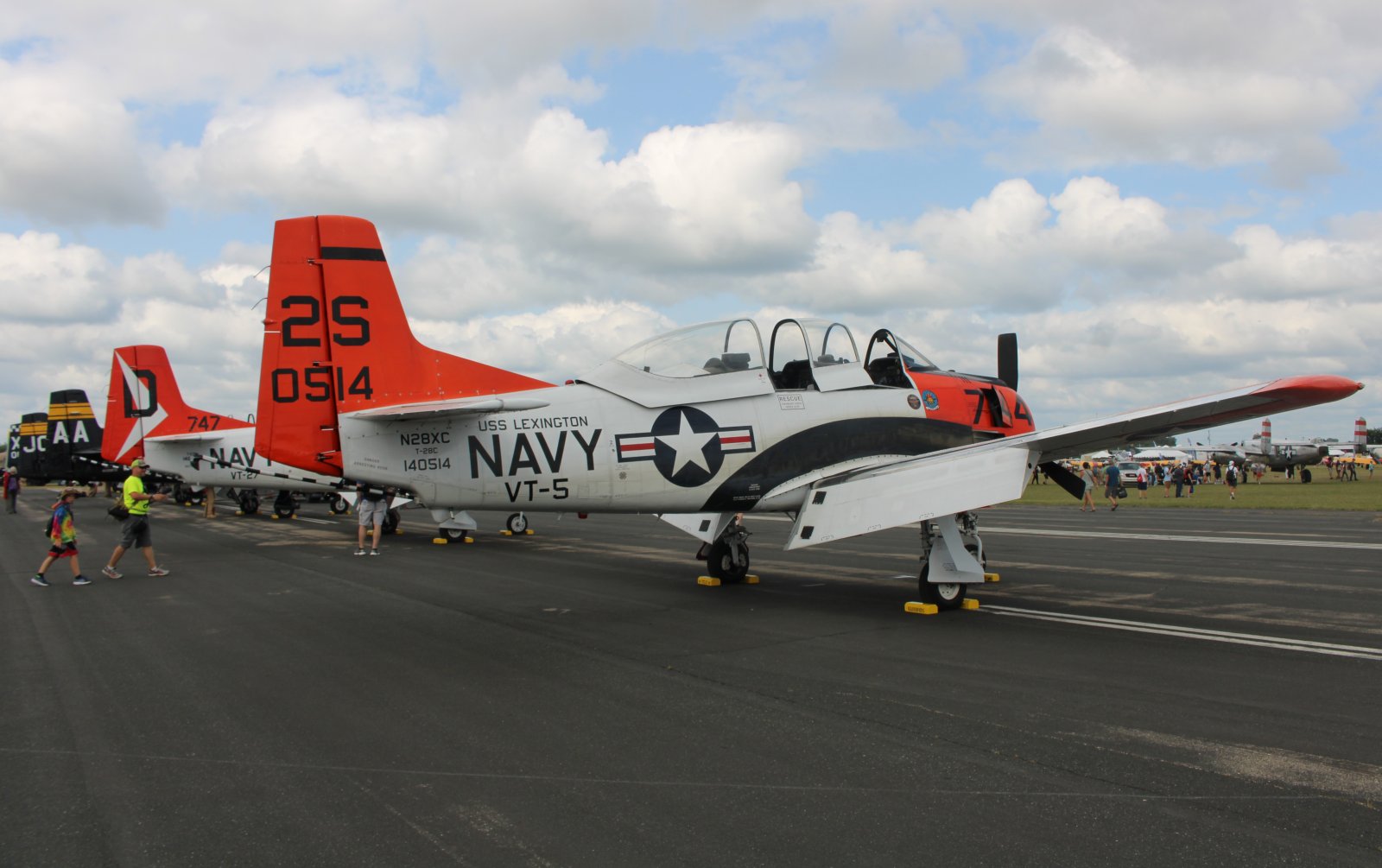
I've always found it hard to believe the U.S. Navy used this big North American T-28 Trojan as a primary trainer.
The North American Aviation T-28 Trojan is a radial-engine military trainer aircraft manufactured by North American Aviation and used by the United States Air Force and United States Navy beginning in the 1950s. Besides its use as a trainer, the T-28 was successfully employed as a counter-insurgency aircraft, primarily during the Vietnam War. It has continued in civilian use as an aerobatics and warbird performer.
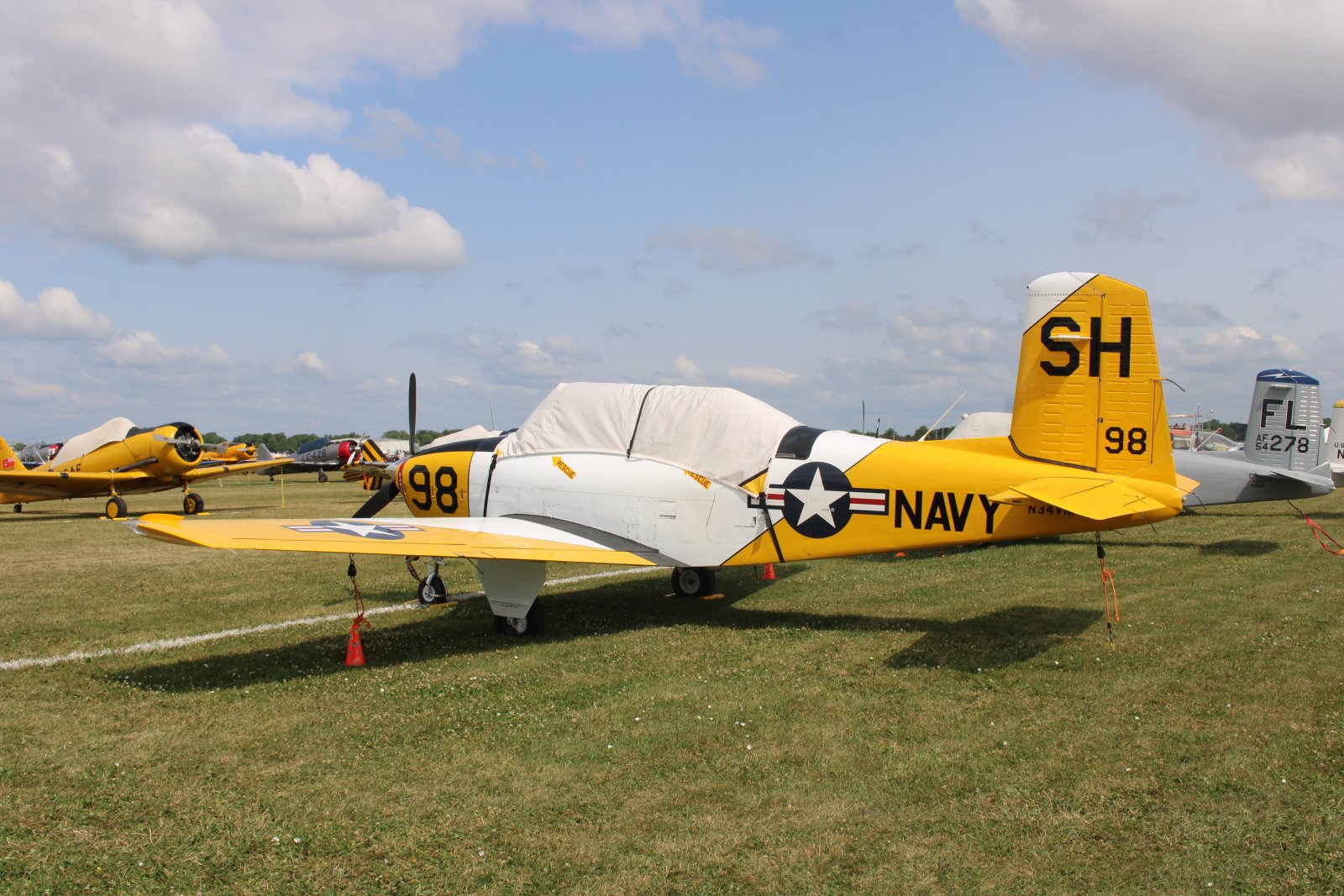
Now this is a rare bird. It's a Consolidated PB4Y-2 Privateer. The Privateer was a purpose-designed U.S. Navy maritime-patrol aircraft derived from the B-24. It served as a long-range maritime patrol aircraft in late WWII and early Cold War periods.
The Navy wanted better stability and handling during the Privateer's long, low-altitude patrols. The single-tail arrangement had actually been tested on an experimental B-24 and proved successful. The Privateer's fuselage was also about seven feet longer than the B-24's, providing room for additional crew stations and equipment. The B-24 was designed to operate at relatively high altitude, so its Pratt & Whitney R-1830 engines had turbo-superchargers. The Privateer didn't need them. Most Navy patrol work was conducted at relatively low altitude, so the Privateer used mechanically supercharged R-1830-94 engines without the B-24's turbo-supercharging system. That made sense for the mission and simplified the engines.
During the Pacific war they operated extensively around the Japanese-held islands. The type also performed missions supporting the invasion of Iwo Jima.
One of its great advantages was endurance. A Privateer could spend hours searching a huge area of ocean, something that was enormously valuable in the Pacific. The Privateer was expected to fly long distances without fighter escort, so the Navy gave it a lot of defensive firepower with 12 .50-caliber machine guns.
Production ran from 1943/44 through 1945, with roughly 739 aircraft built. The Privateer therefore arrived just as the war was entering its final stages.
Privateers continued in Navy service through the Korean War. They performed long-range patrol and reconnaissance missions, and the type remained useful because its combination of endurance, weapons and low-altitude performance was difficult to replace.
After military service, a surprising number of Privateers became aerial firefighting aircraft. And they were very well suited to it. Four powerful engines, enormous fuel capacity, rugged construction and a huge fuselage made them excellent platforms for carrying fire retardant or water.
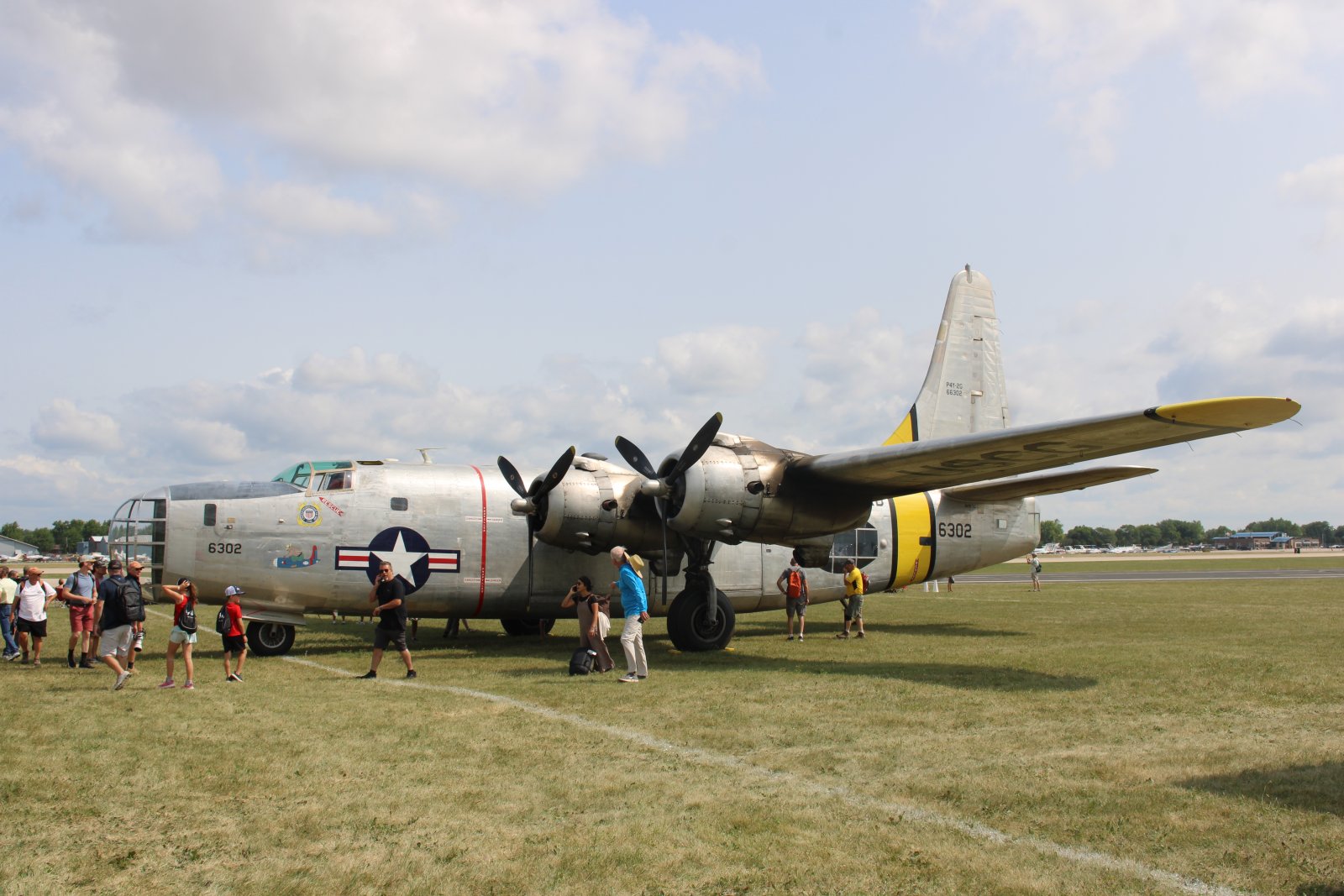
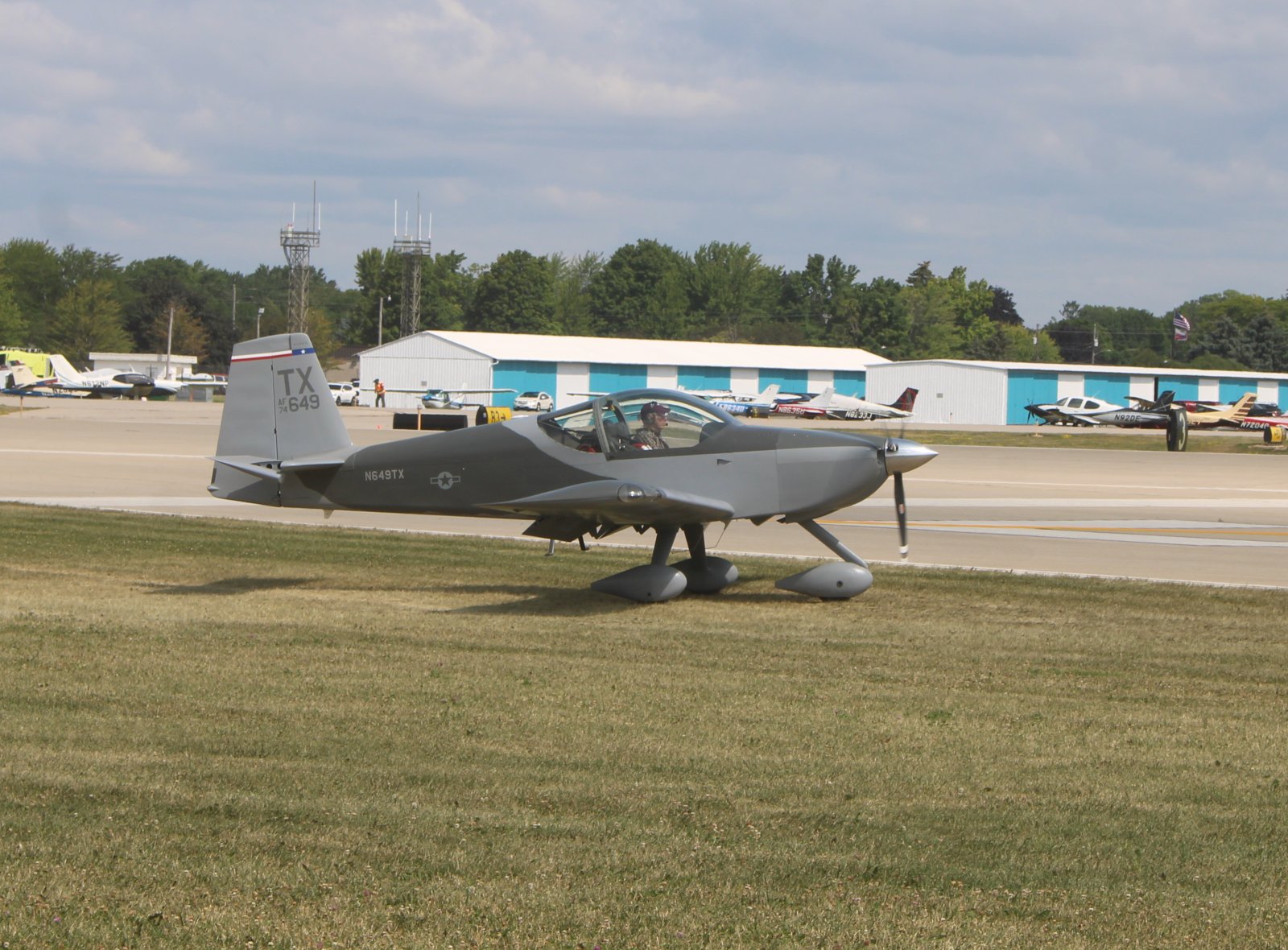
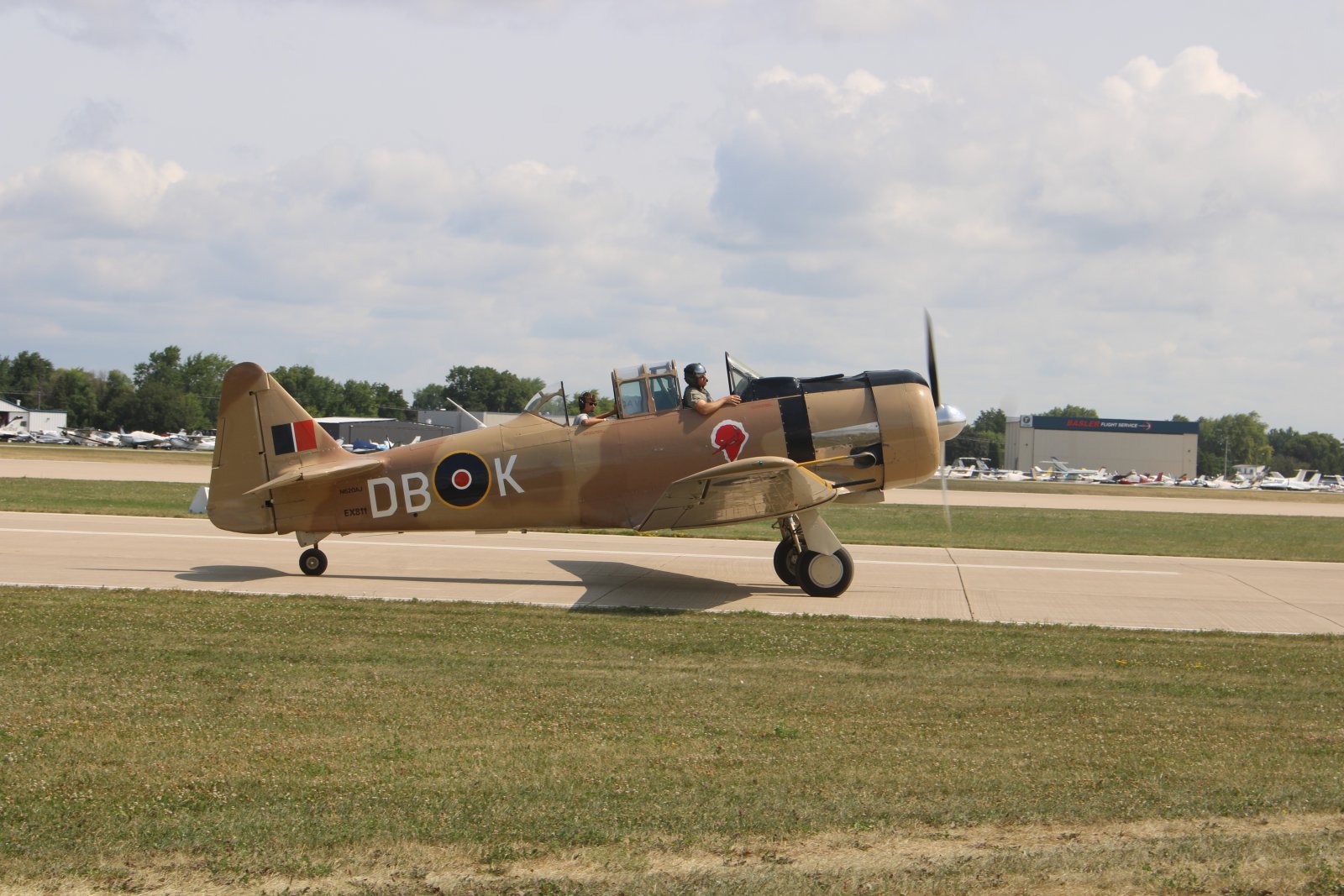
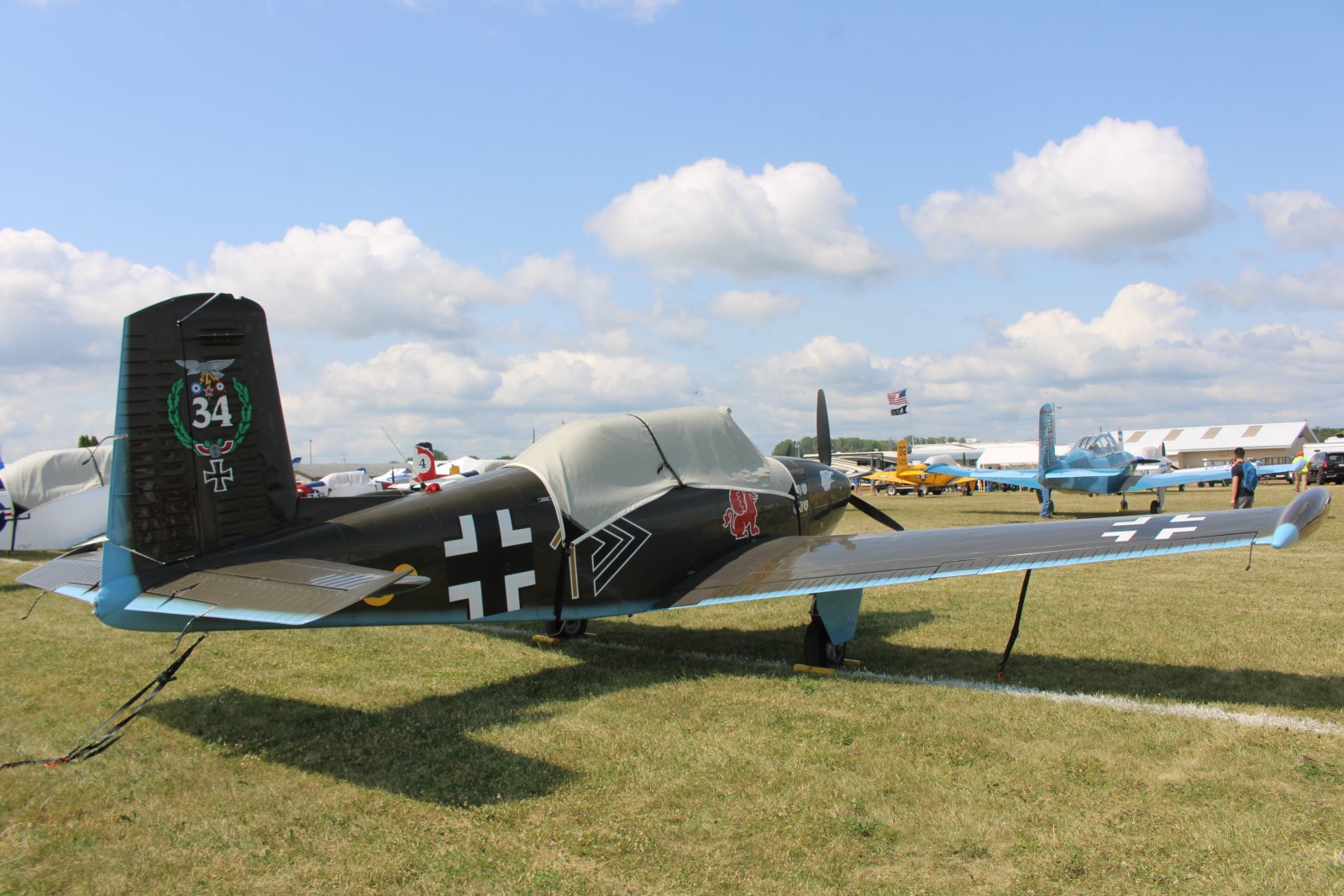
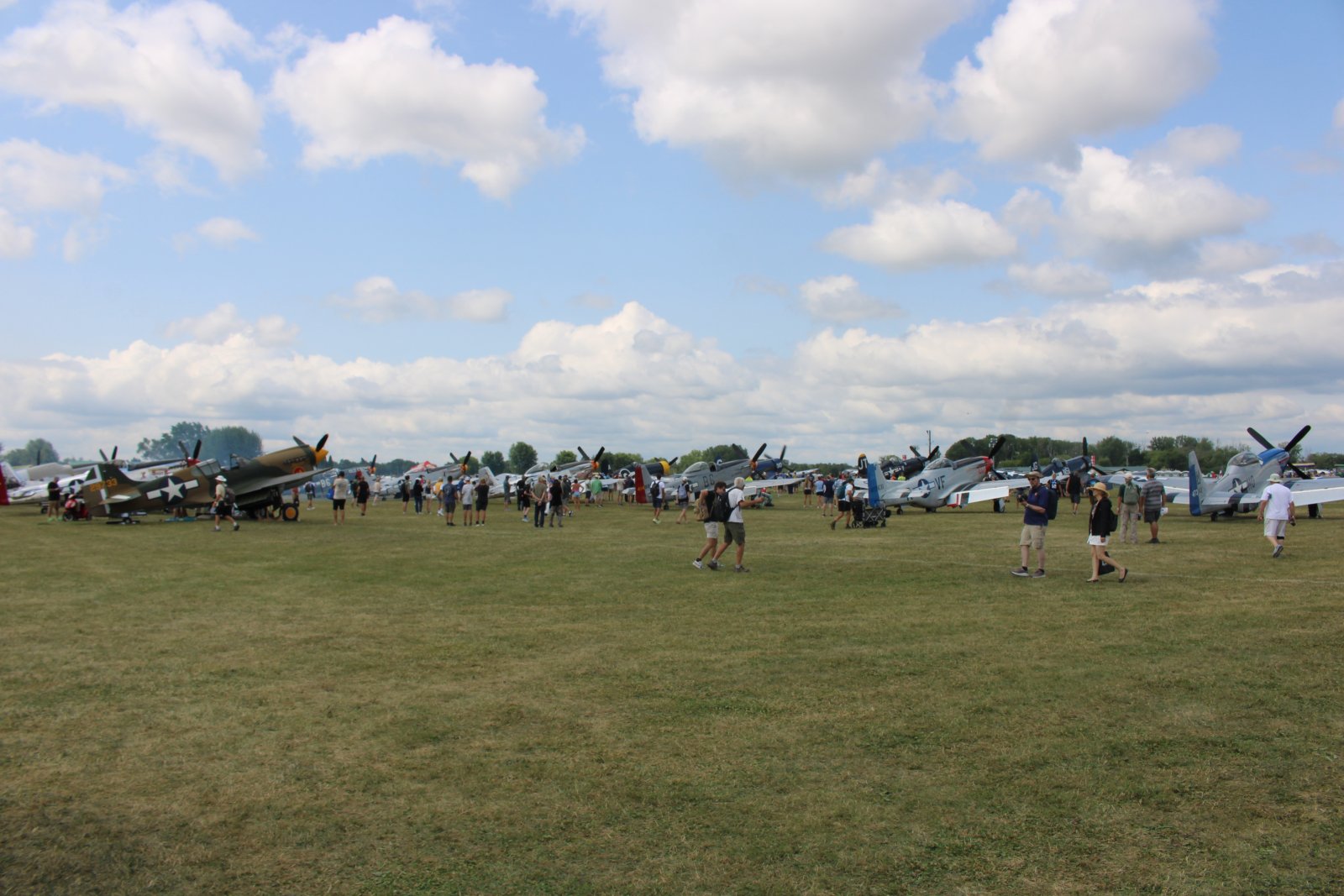
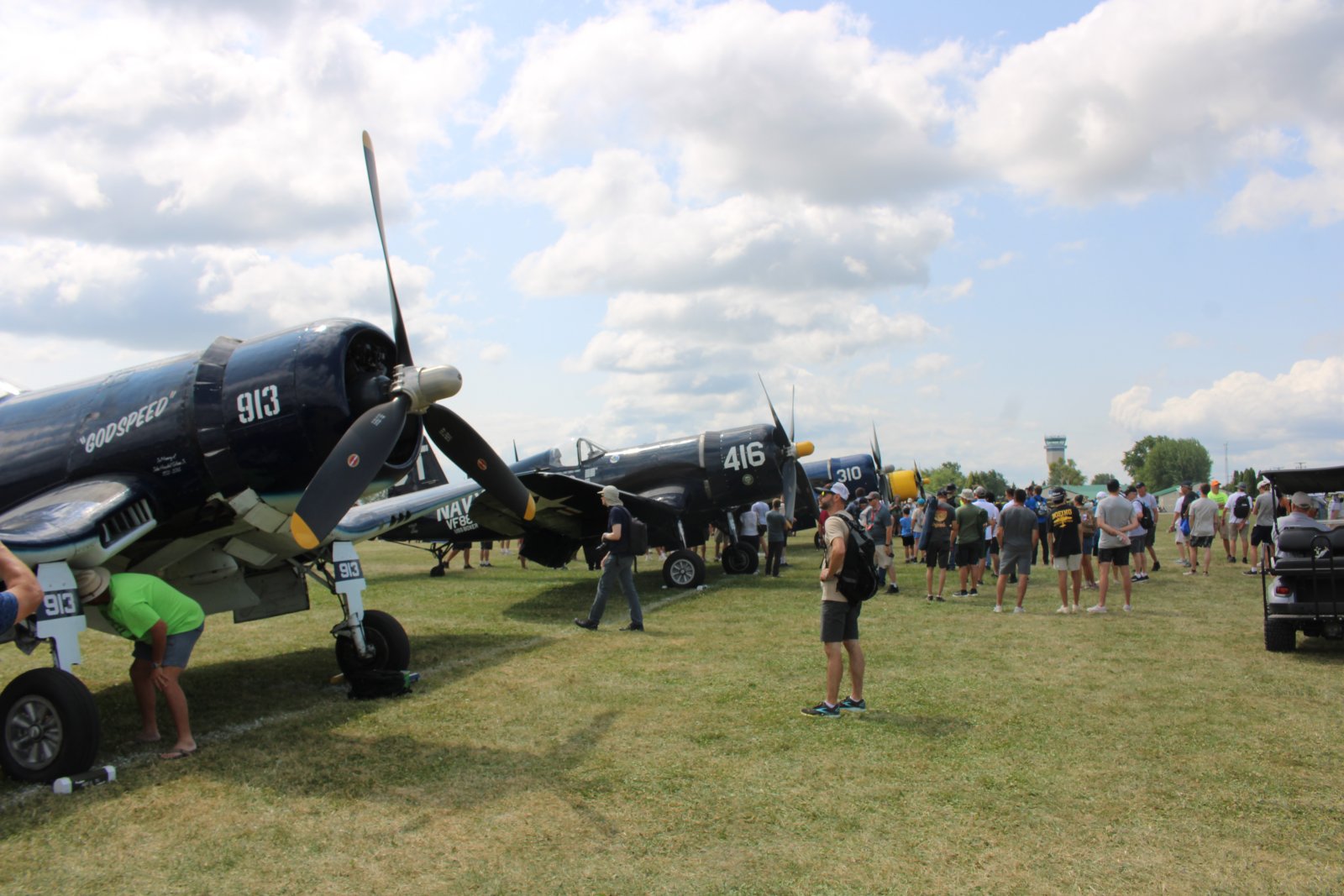
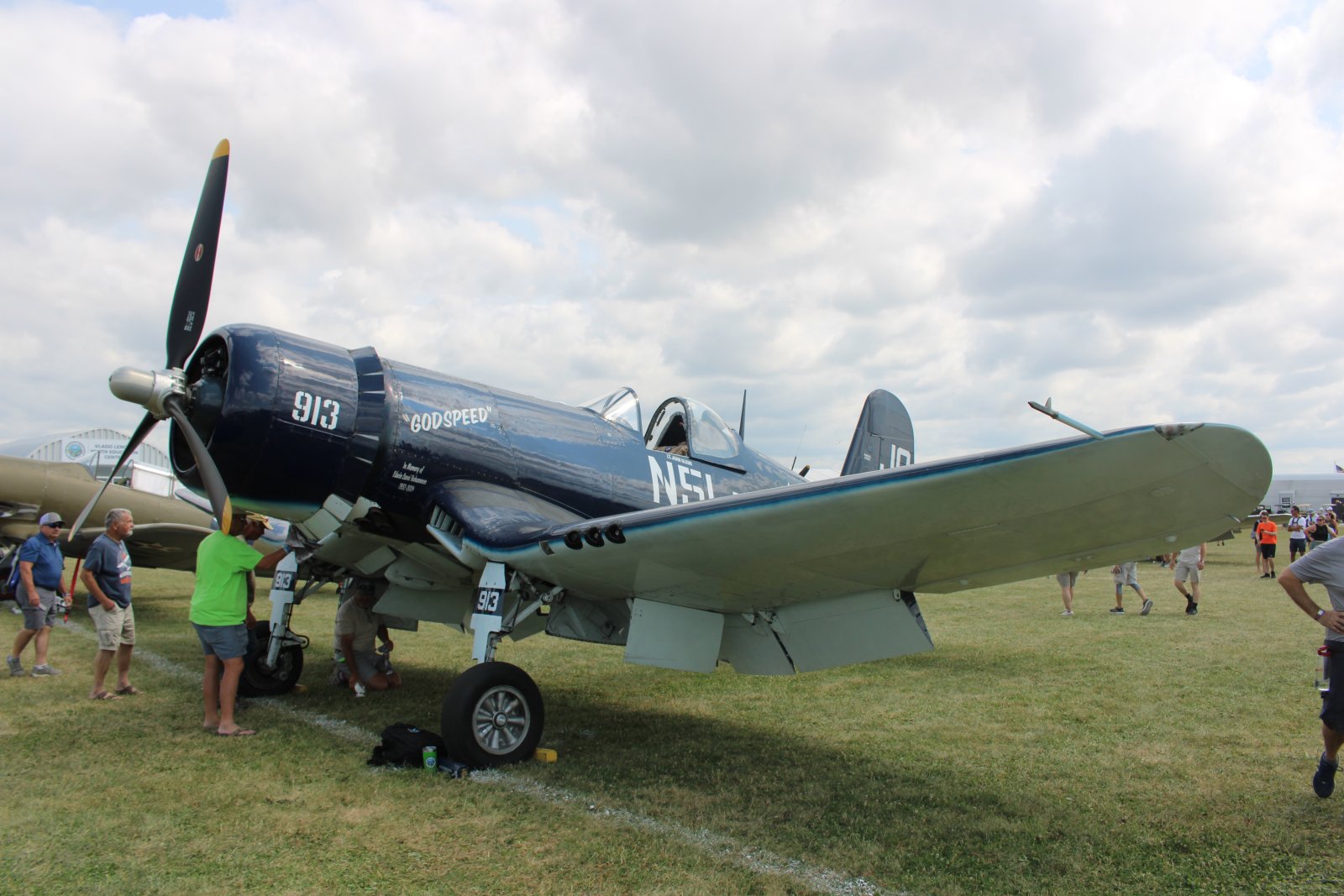
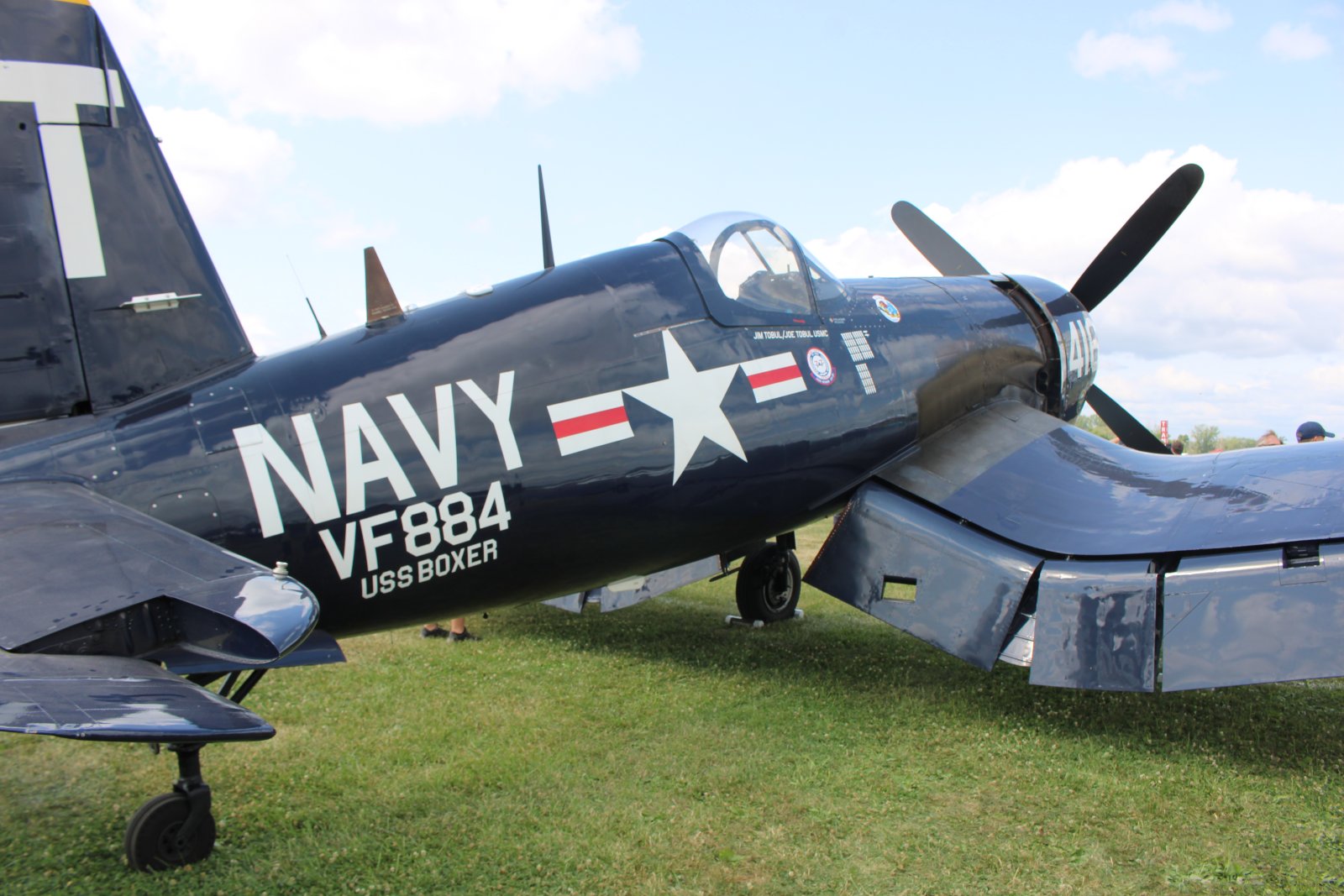
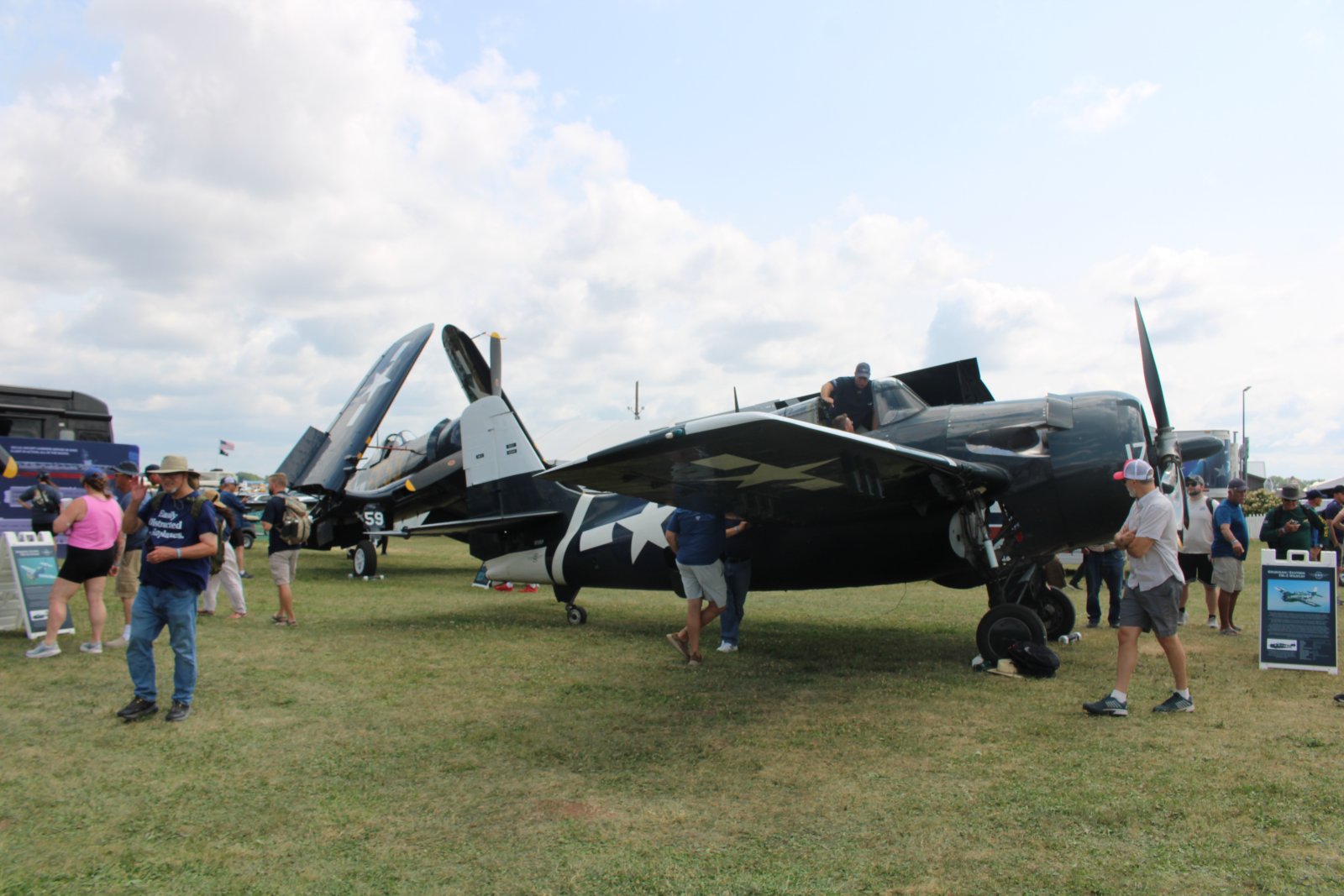
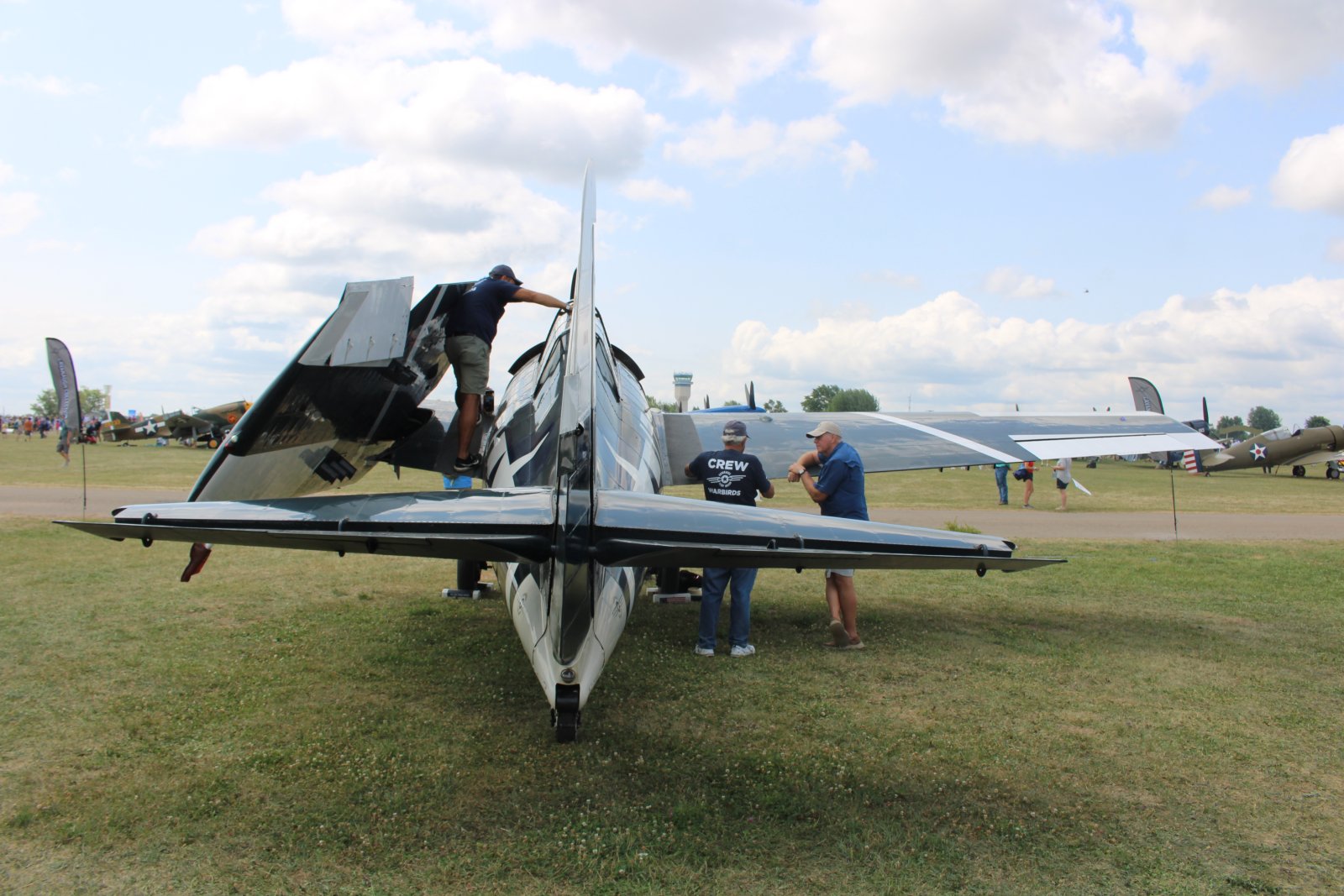
Some U.S. Navy WWII airplanes from the Cavanaugh Collection were on hand. I've heard of Cavanaugh. Back in 2019, I visited the Cavanaugh Flight Museum at Addison Airport with a friend who was a volunteer worker there: Link.
The museum operated at Addison Airport (KADS) for 31 years, opening in 1993. In late 2023, Addison did not renew the museum's lease, and the museum announced that its final weekend open to the public would be December 30–31, 2023. It officially closed on January 1, 2024. The basic reason was redevelopment of the airport property. Addison planned to use the museum's former area for additional corporate-jet hangars, office space and parking. Town documents show that the Cavanaugh leases were expiring and that the airport wanted the property back for redevelopment.
Cavanaugh's extensive collection is now at the North Texas Regional Airport (KGYI) but it is not a museum and not open to the public.
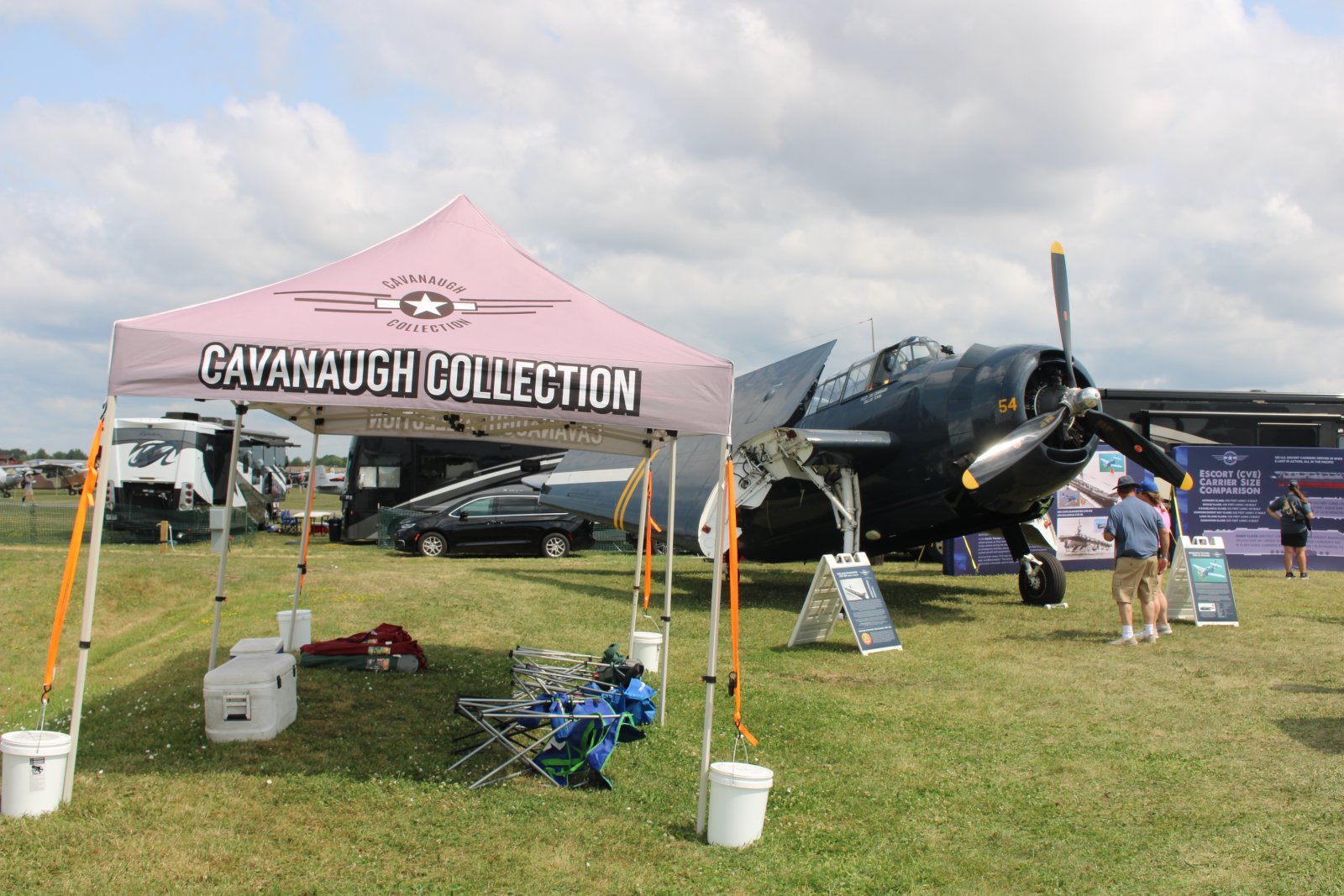
The Curtiss P-36 Hawk is a particularly important airplane because it sits right at the transition between the fighters of the 1930s and the much more capable fighters of WWII. It was also the direct predecessor of the P-40 Warhawk.
Curtiss developed the airplane as the Model 75, a private venture in the mid-1930s. The prototype first flew on May 6, 1935. It was a big step forward from Curtiss's earlier biplane fighters: an all-metal, low-wing monoplane with retractable landing gear and an enclosed cockpit. The U.S. Army Air Corps ordered it as the P-36A, beginning deliveries in 1938. The Air Corps ultimately obtained 243 P-36s. Its Pratt & Whitney R-1830 produced about 1,050 hp, giving the P-36 a maximum speed around 313 mph.
Curtiss aggressively marketed the Model 75 overseas. France bought large numbers, calling it the Hawk 75A. When Germany invaded France in 1940, French Hawk 75s went into combat against the Luftwaffe. They fought Messerschmitt Bf 109s and actually performed surprisingly well in individual engagements. The P-36 was maneuverable and had good handling qualities, although it was increasingly outclassed in speed and high-altitude performance. After France fell, some of the French Hawks ended up with Vichy French forces, while others eventually passed to the British and other operators.
The type also saw combat with Chinese, Norwegian and Finnish forces. Finland in particular operated Hawks against the Soviet Union and had considerable success with them.
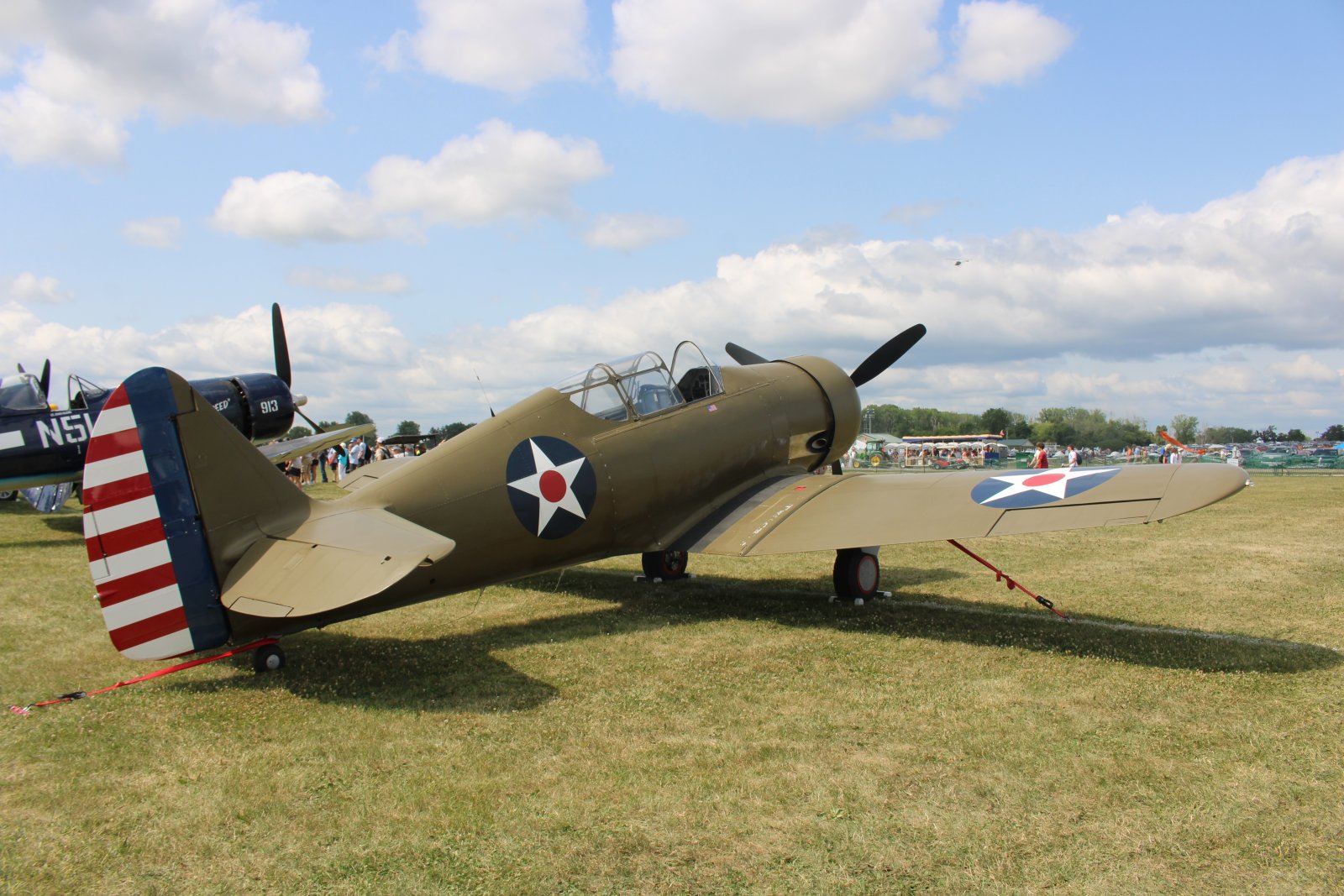
Curtiss took the P-36 airframe and asked: "What if we put a liquid-cooled Allison V-1710 engine in it"? That led to the XP-37, followed by the XP-42, and eventually the P-40 Warhawk.
On December 7, 1941, a handful of P-36s were at Wheeler Field and Haleiwa, Hawaii, when the Japanese attacked. One pilot, Lt. Philip Rasmussen, managed to get airborne in a P-36A during the attack. He engaged Japanese aircraft and claimed victories. His airplane was riddled with bullets.
Rasmussen's P-36 was 38-001, the first P-36A delivered to the Army Air Corps. That airplane is now preserved at the National Museum of the U.S. Air Force in Dayton. The museum displays it in Rasmussen's Pearl Harbor markings.
When it entered service in 1938, the P-36 was a modern fighter. By 1941, the world had changed dramatically. The Messerschmitt Bf 109, Supermarine Spitfire, Hawker Hurricane and newer American fighters were considerably more advanced. The P-36's speed of roughly 313 mph simply wasn't enough. After Pearl Harbor, the Army quickly moved most P-36s into training and secondary duties.