July 19-26, 2026 - AirVenture 2026
Forums
|
|
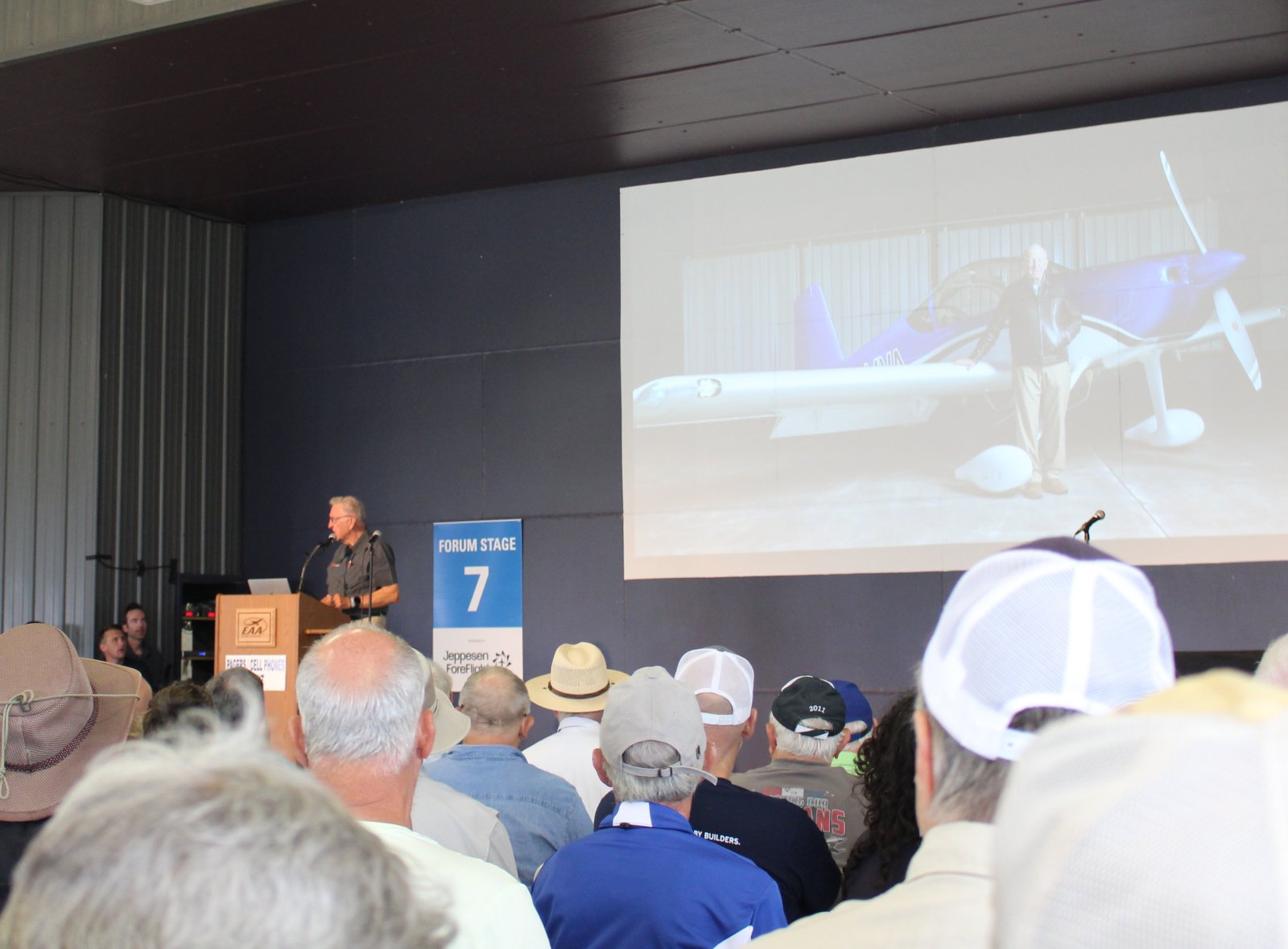
I was at the show five full days and went to a lot of forums. The first one was "What's New at Vans Aircraft Company". It started at 8:30 Monday morning; another reason to arrive at Oshkosh Sunday afternoon.
The first speaker was the founder himself: Van.
|
| |
 |
|
|
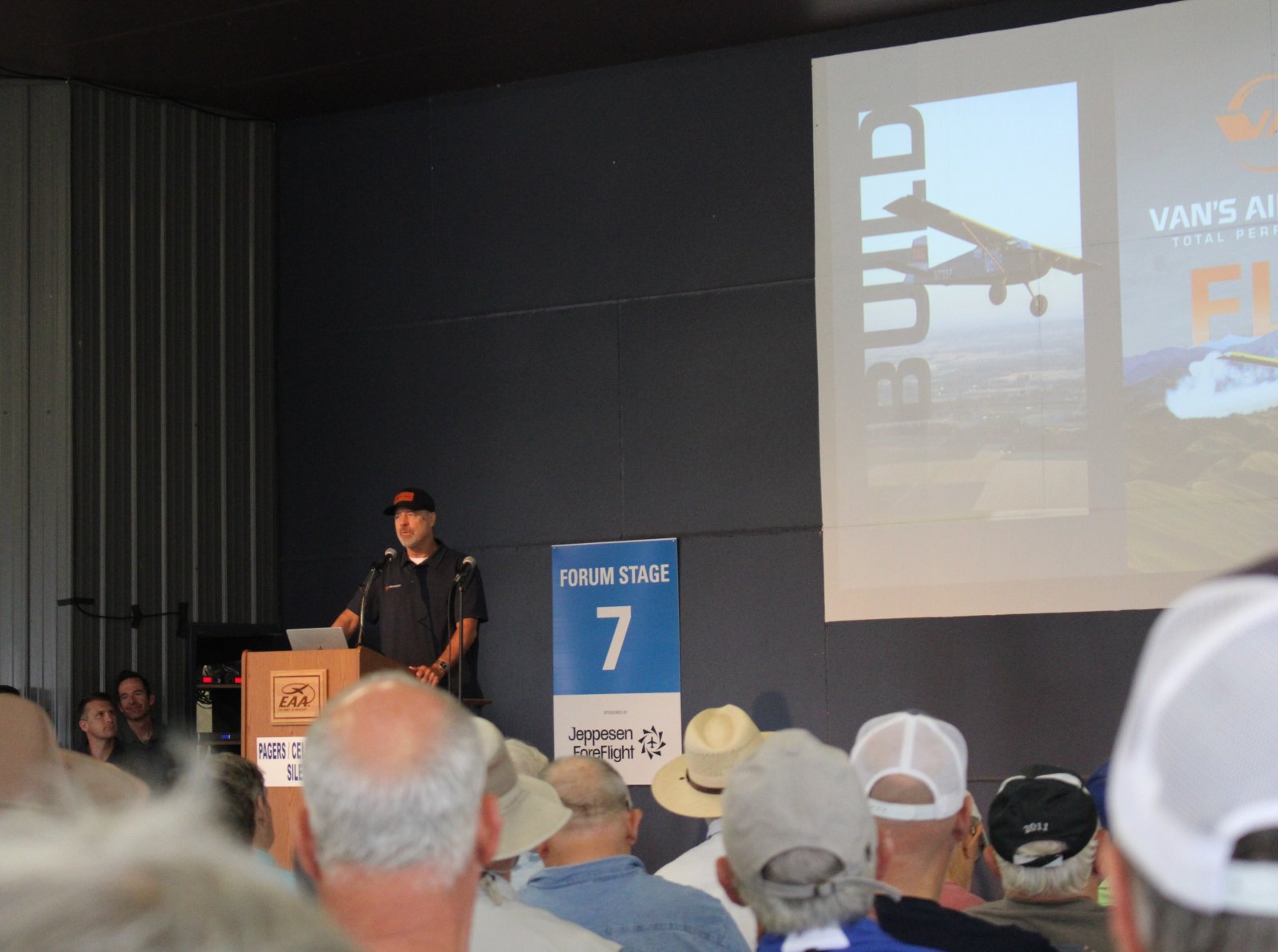
He was followed by Van's (relatively) new CEO: Mikael Via. We next heard from Lycoming, Hartzell and Garmin reps. Then Shawn Bell of Vans operations, Kevin Miller, Rian johnson and Marc Cook.
Did you know that Vans is now manufacturing RV-12s? They can produce one in three days. Eventually they will produce RV-15s in house as well.
|
| |
 |
|
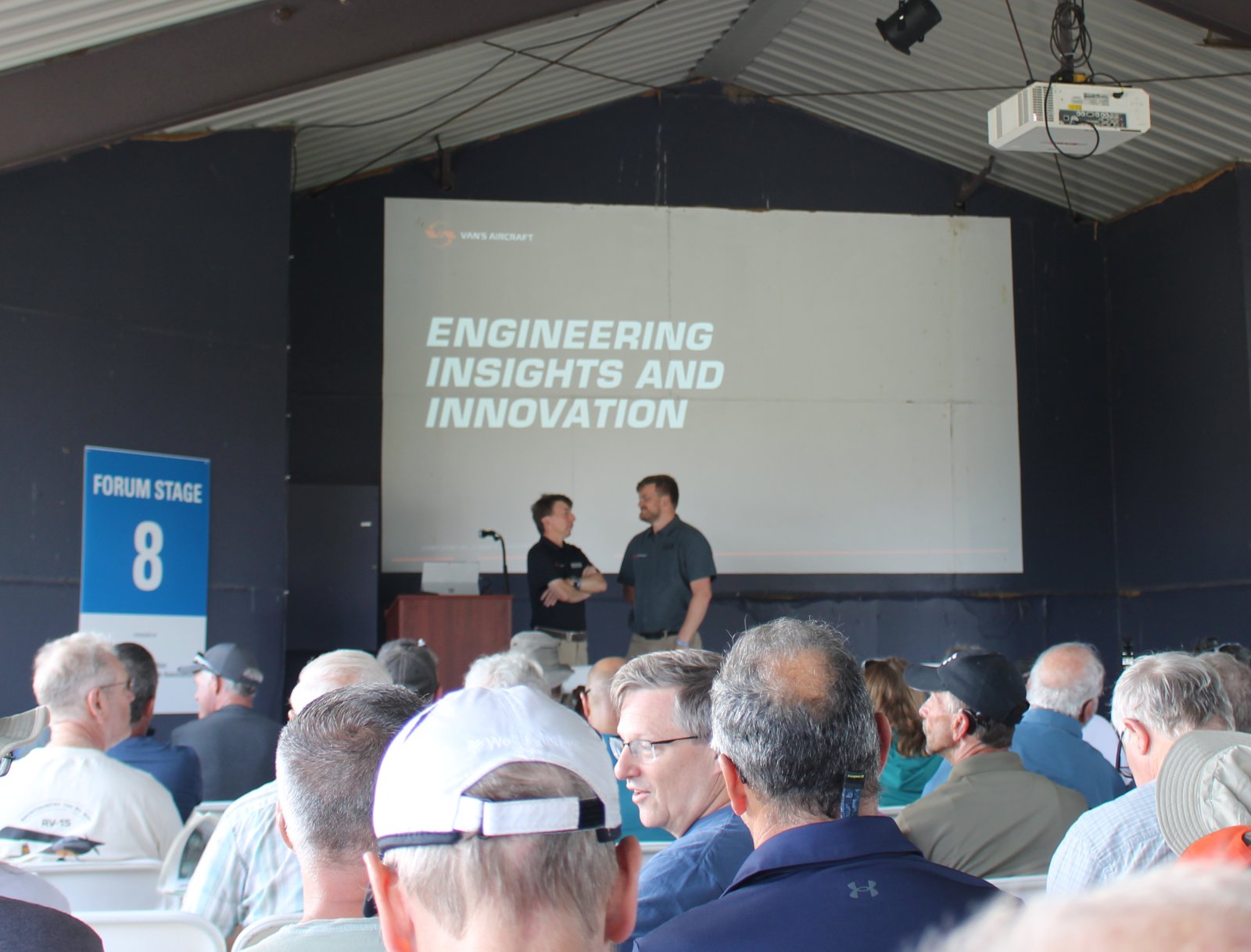
| Tuesday morning, again at 8:30, I listened to Chief Engineer Rian Johnson and Brian Hickman about Van's Aircraft engineering efforts with lots of info about the RV-15. |
| |
 |
|
|
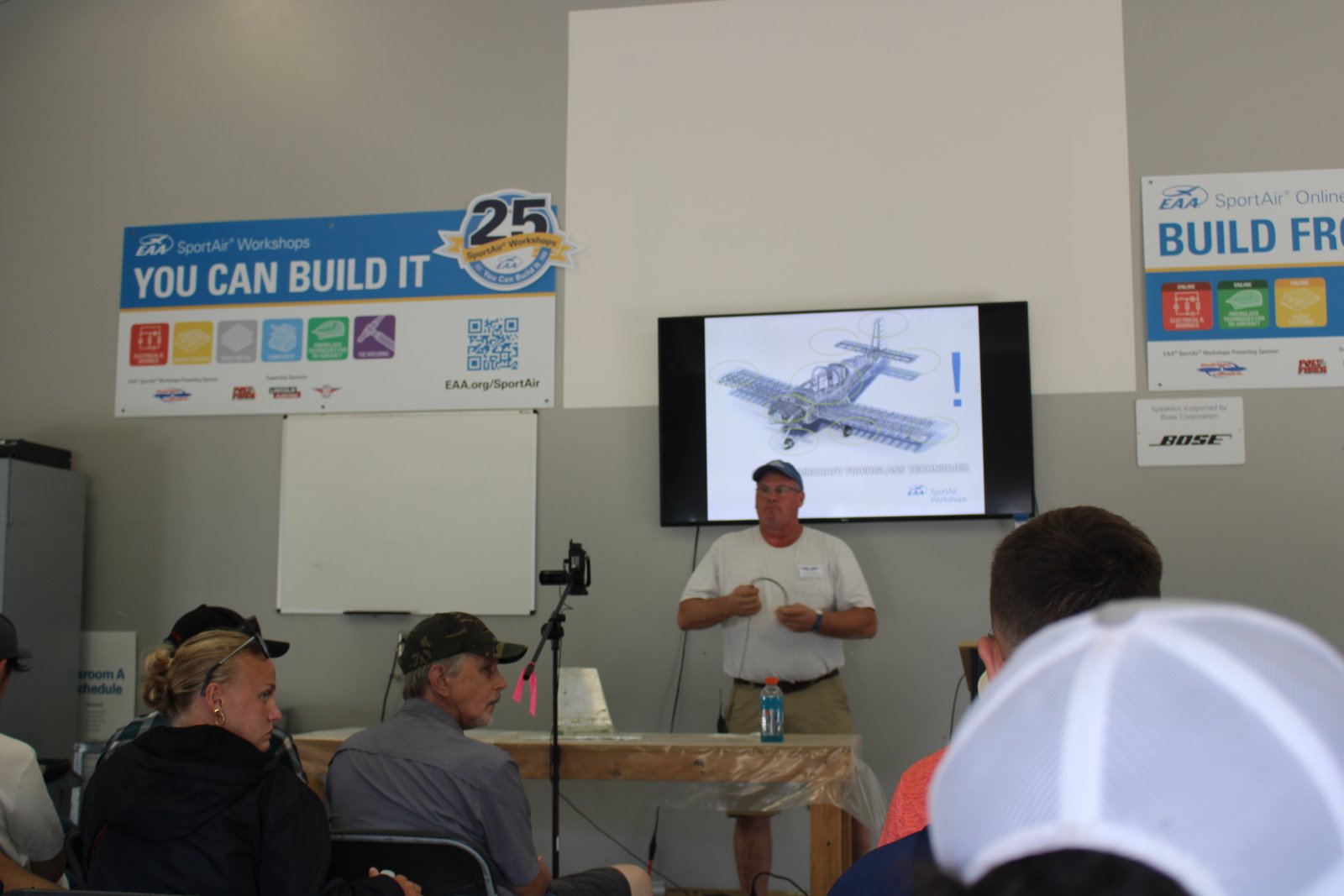
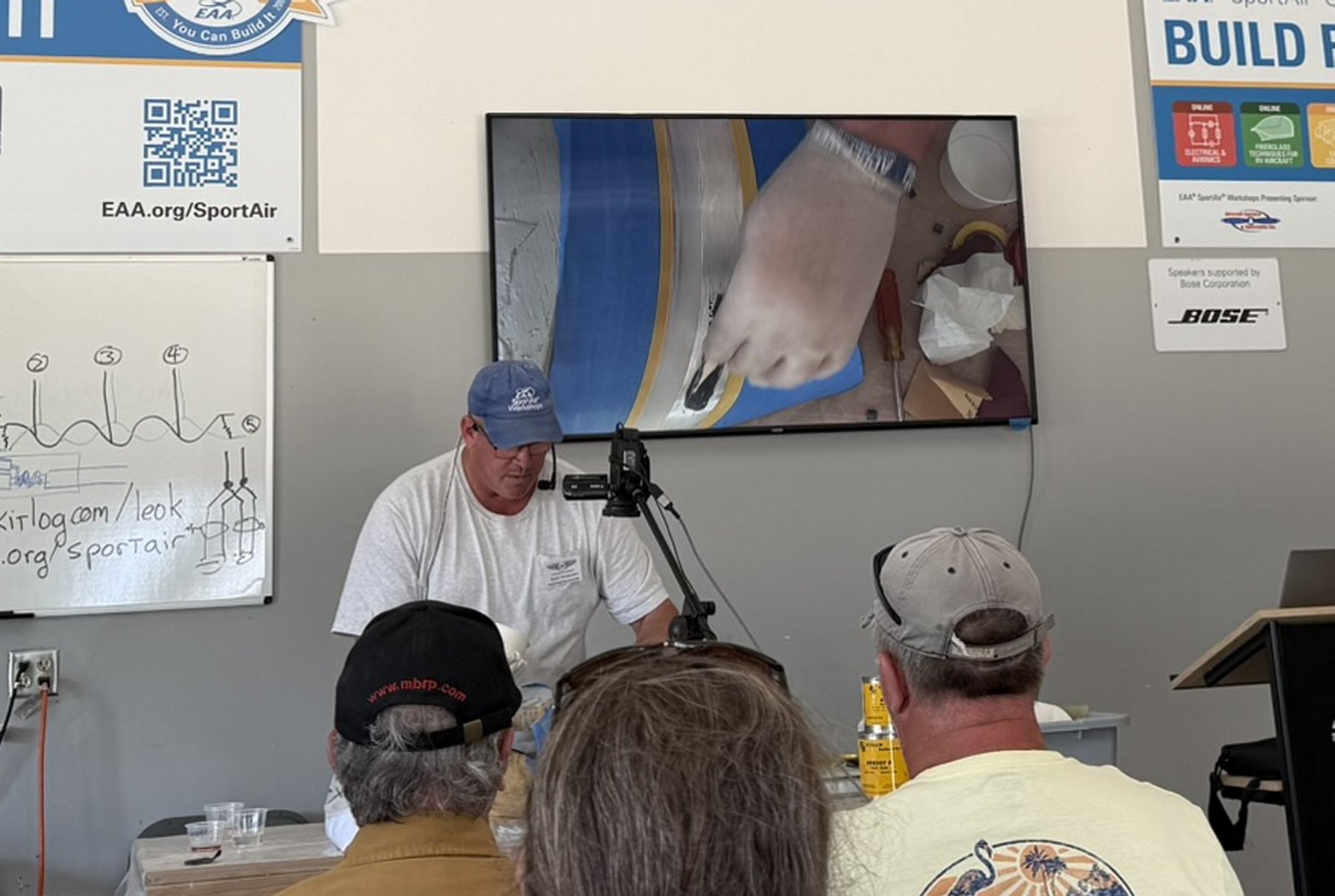
Tuesday I went to the Fiberglass for RVs presentation, given by Scott VanderVeen who does an EAA SportAir Workshop on it. This was really excellent.
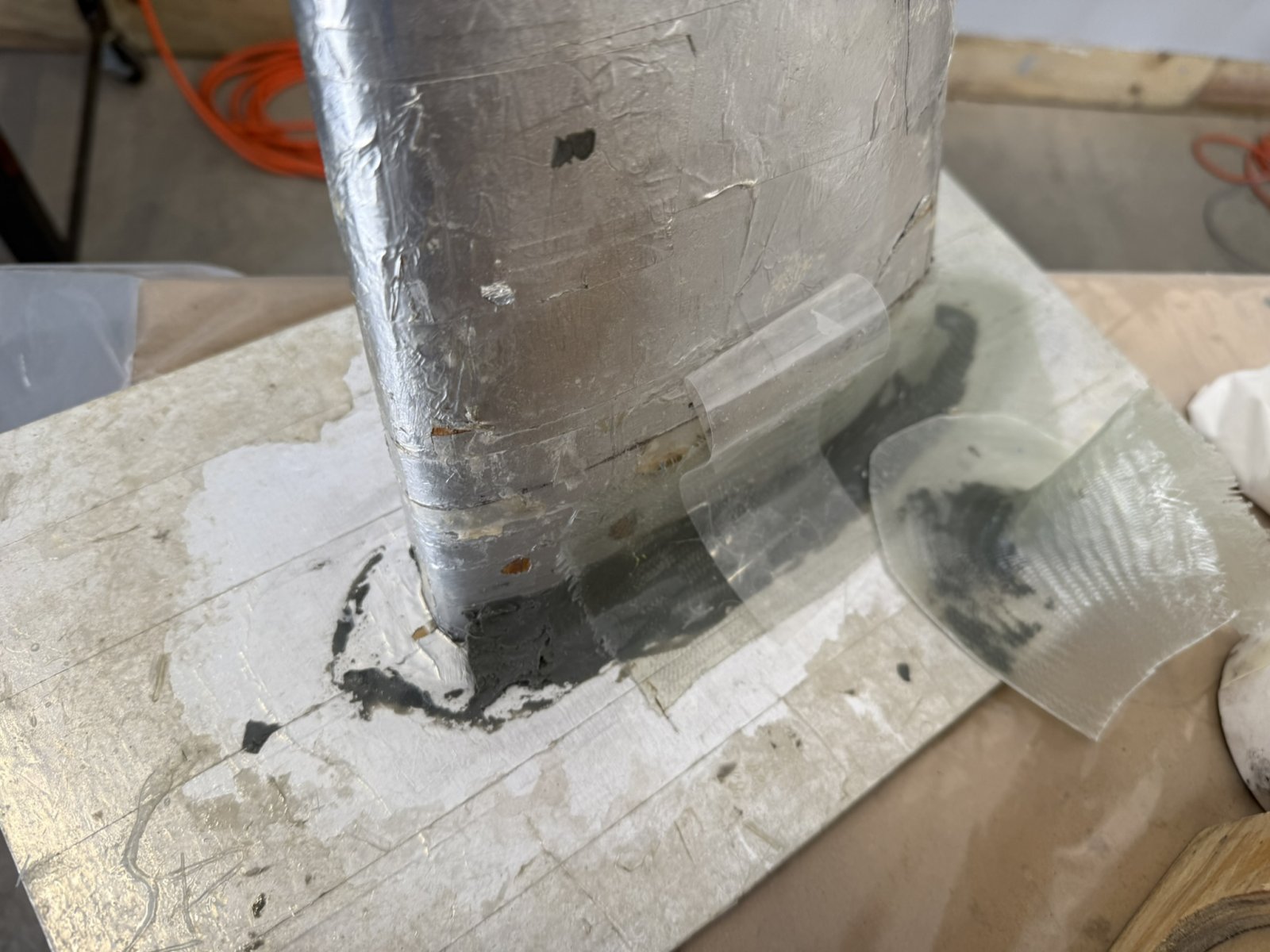
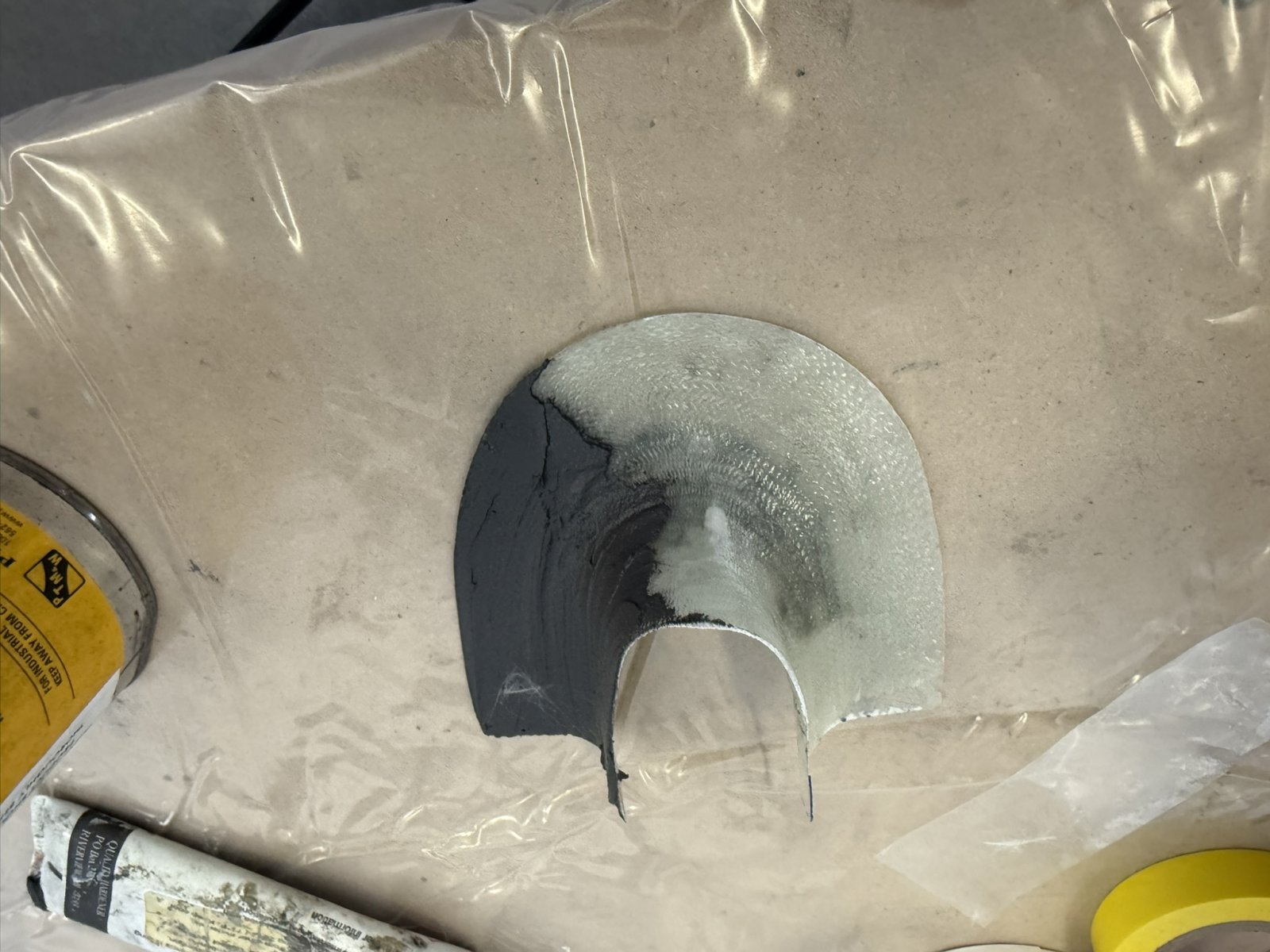
Many AirVenture's ago, I went a presentation given by the fiberglass guru Sam James where he demonstrated making an intersection fairing. This was an updated and improved version of that. Scott actually made an intersection fairing.
|
| |
 |
|
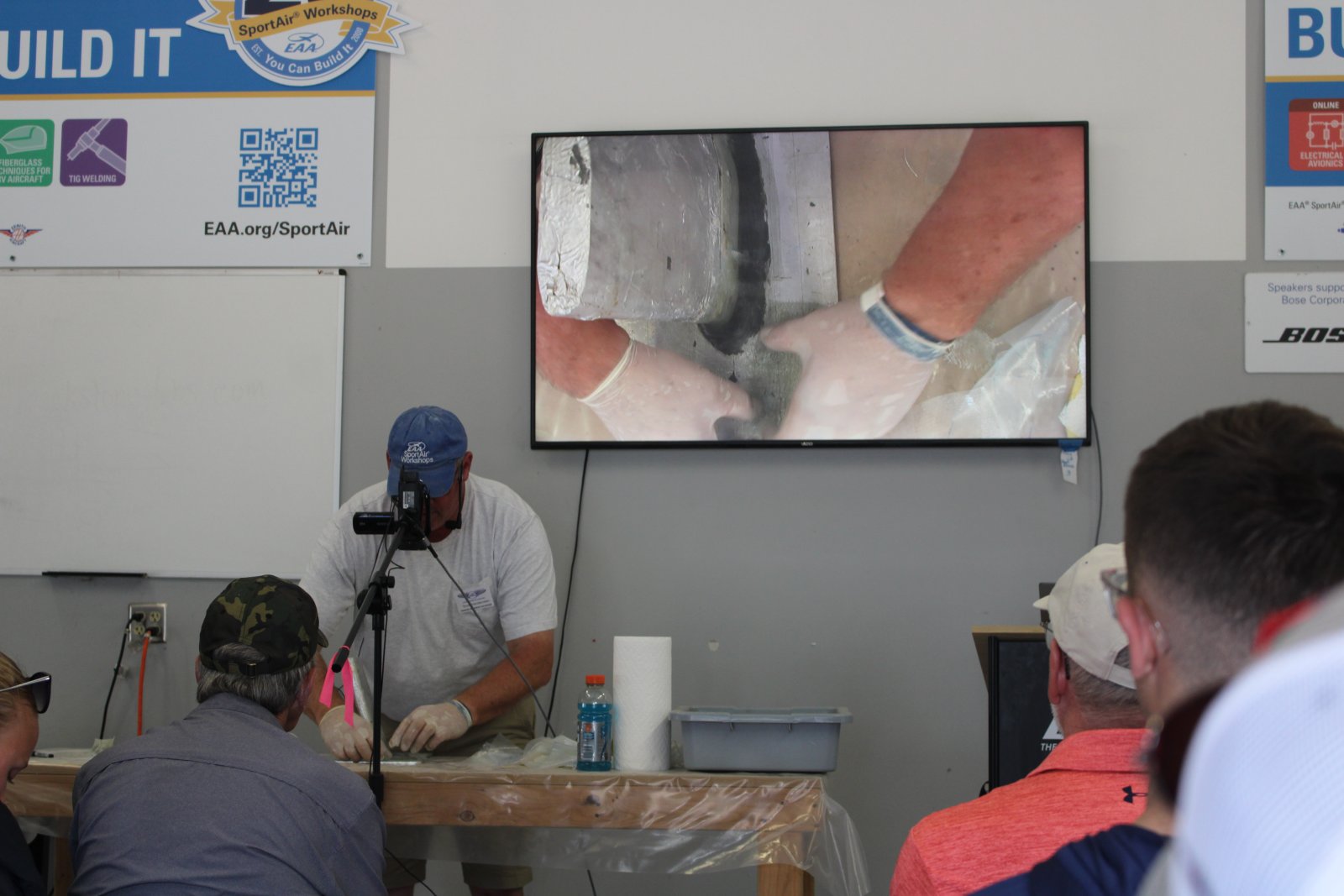
| Scott had a camera looking down on his work so we could see what he was doing up close on the big screen TV. Very effective. Here he has laid modeling clay around the base of the gear fairing. |
| |
 |
|
|
|
| |
 |
|
| |
| |
 |
|
Scott VanderVeen's presentation on Tuesday was so good, I went to part two on Thursday and part three on Friday.
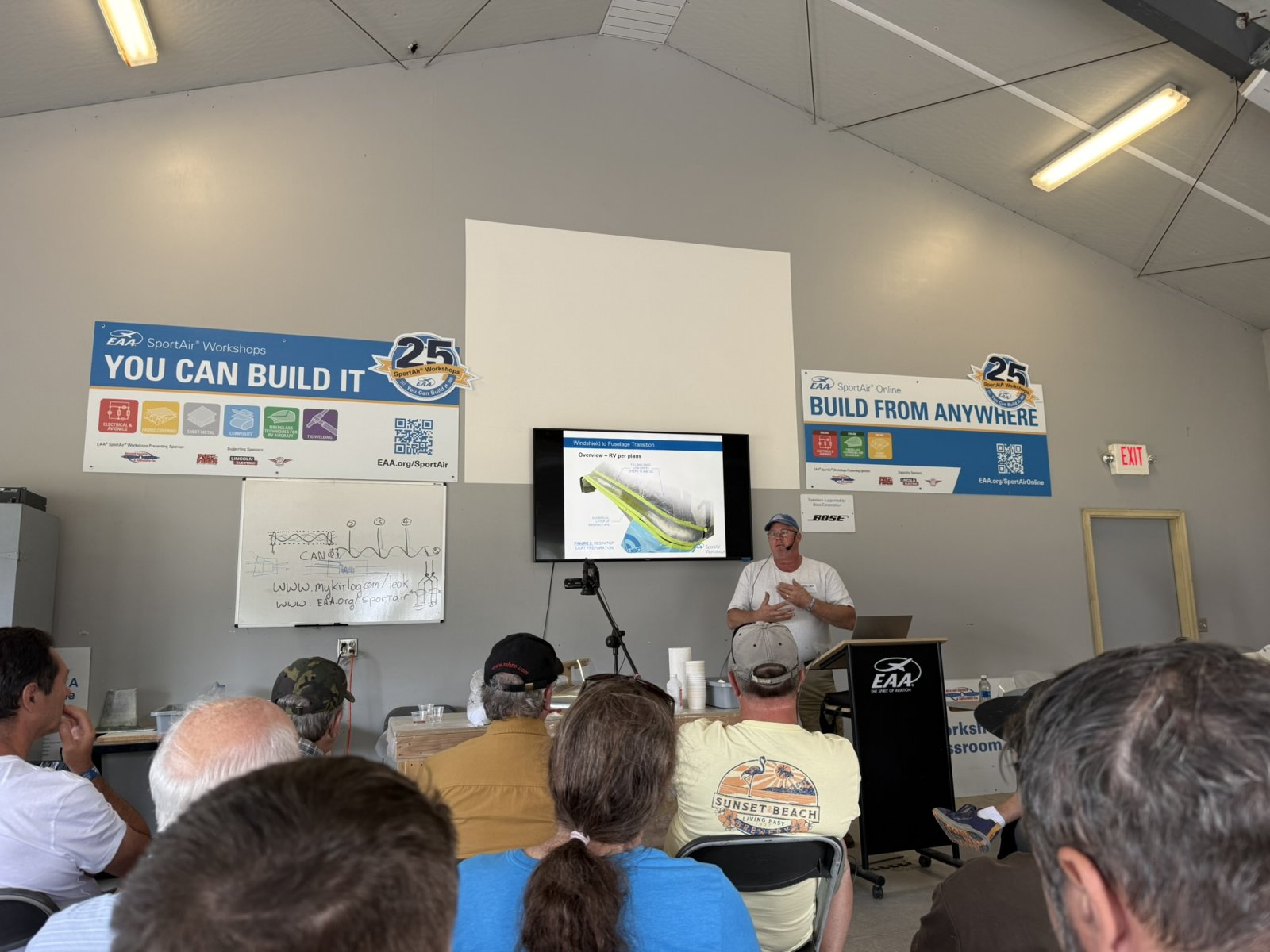
Here in Part Two, Scott demonstrates how to glass intersection between the RVs windshield and aluminun skin.
|
| |
 |
|
|
|
| |
 |
|
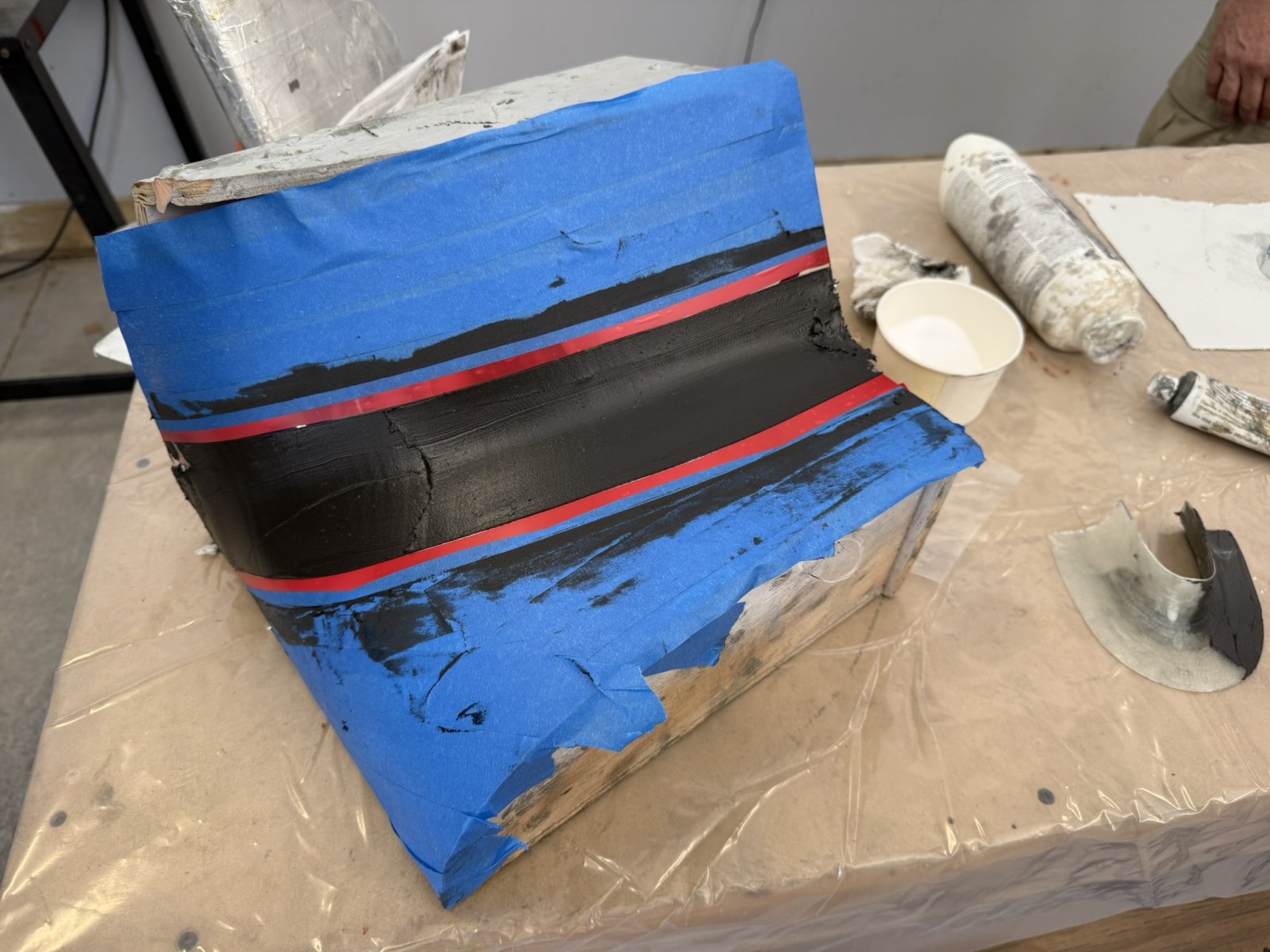
The final product. He did this in about an hour. Do you know how much time I spent doing this on my RV-7 and later the RV-10? A lot more than an hour.
It's a much different technique that what the Van instructions call for.
|
| |
 |
|
|
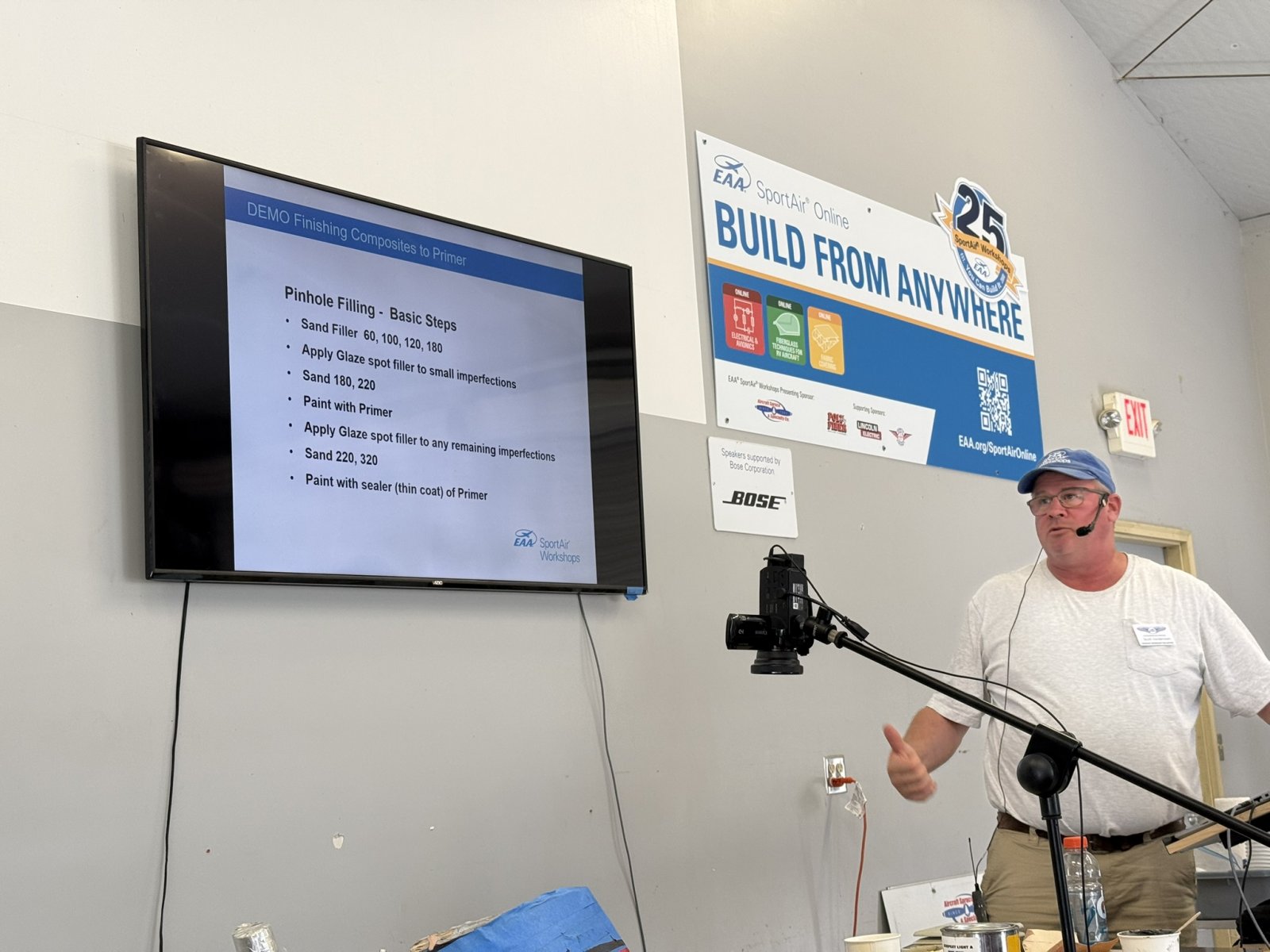
The third session addressed filling rough fiberglass and the biggest isssue of all: filling the dreaded pinholes!
I really got a lot out of the three sessions and will use Scott's techniques if I ever do any more fiberglass work. If you are building an RV, I recommend taking Scott's SportAir online workshop first, before doing any fiberglass work.
|
| |
 |
|
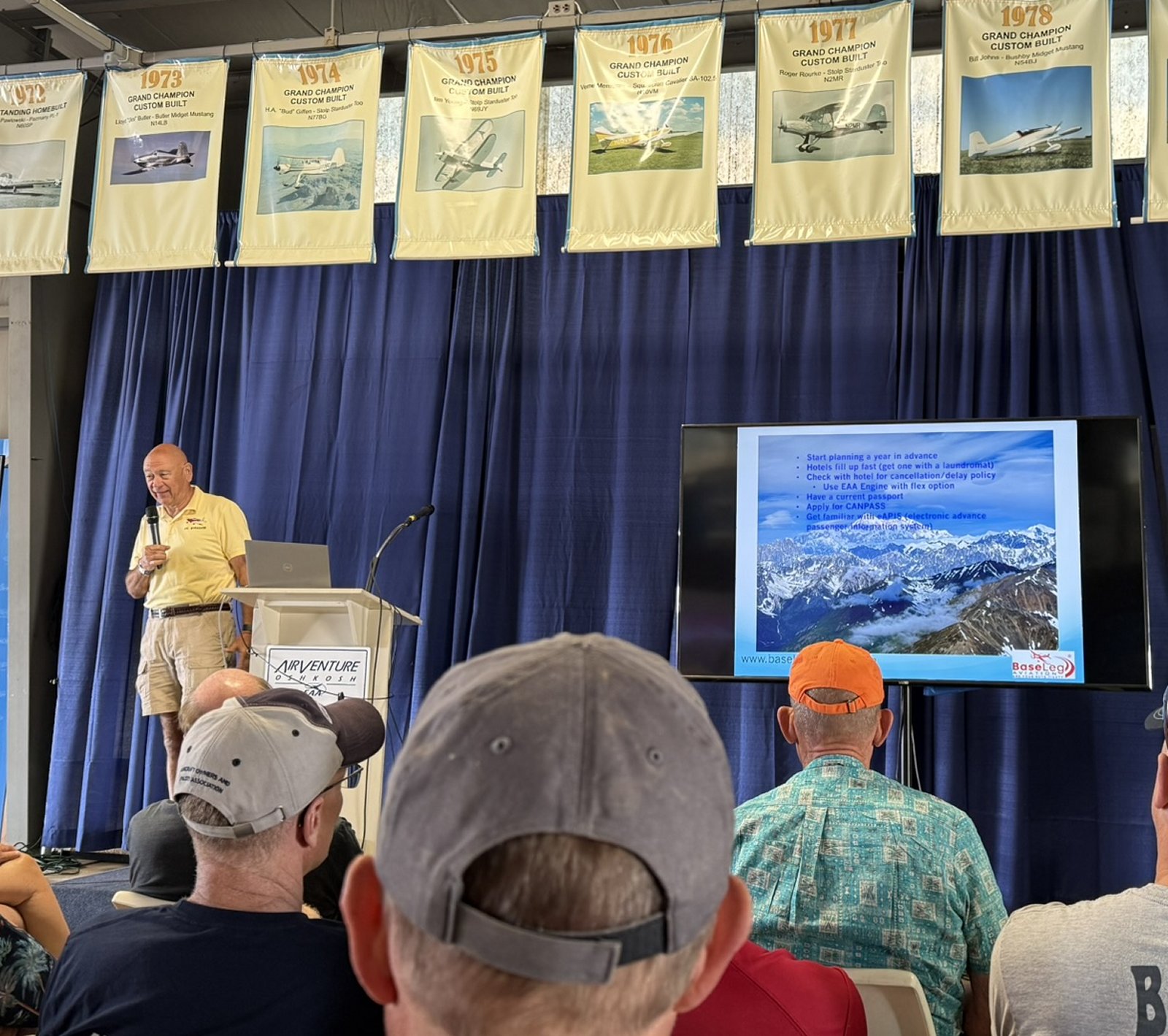
| Wednesday morning I went to the Homebuilder's Hangar to hear Vic Syracuse talk about "Flying To Alaska". As you would expect from Vic Syracuse, it was excellent, and I ended up buying his book later. Because I have flown to Alaska once, I was familiar many of the places he referred to which was beneficial. But I haven't flown the Coastal Route so his information about that was particularly interesting to me. Things like "200 feet ceiling is considered 'good VFR'"! I hope to fly to Alaska next year. I'd like to fly the coastal route if possible, which Syracuse says is the prettiest route. Weather-permitting of course. |
| |
 |
|
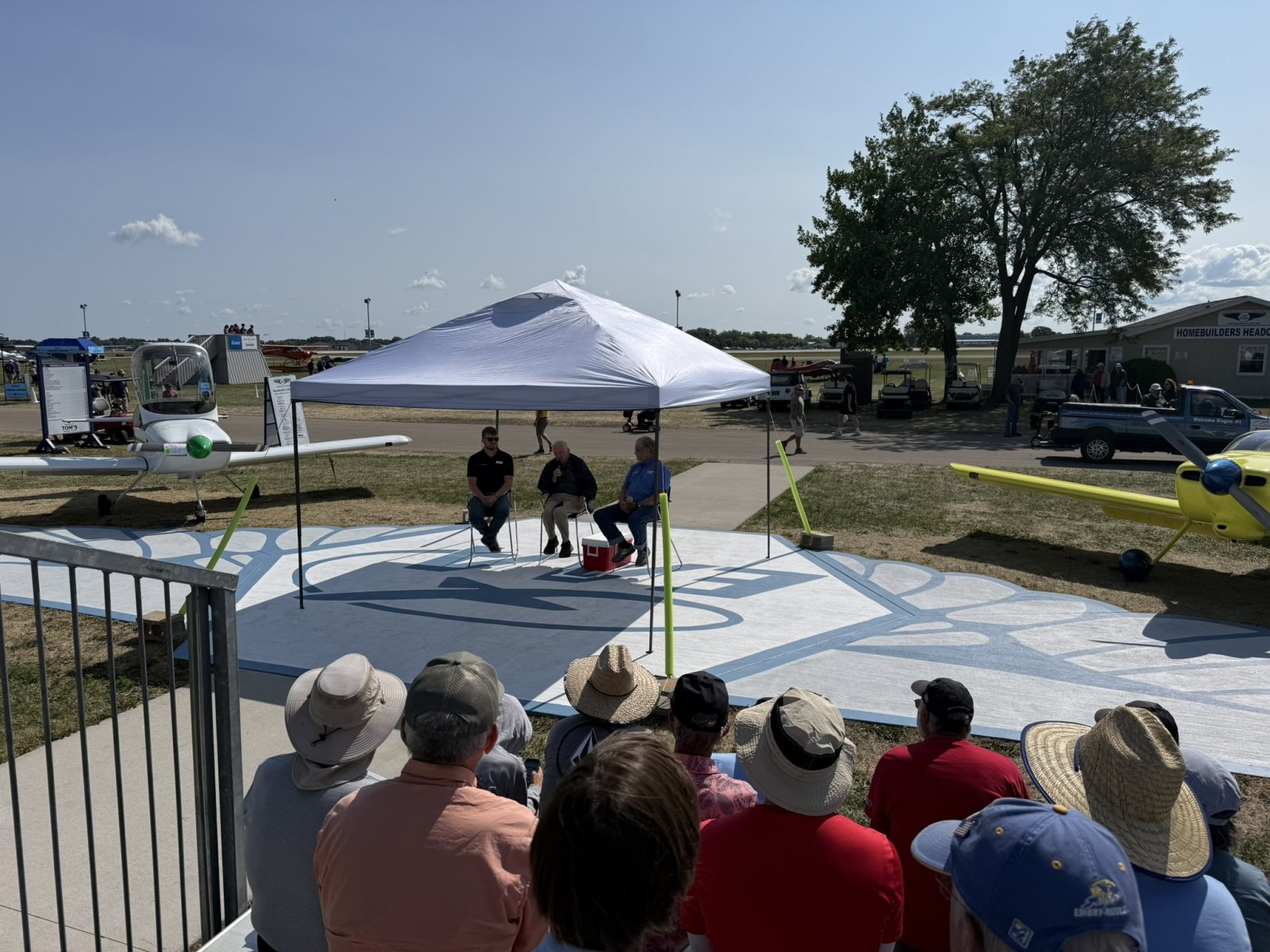
| Next up was the Homebuilts in Review of the RV-6 and RV-7. I was surprised to see that the speaker was Van himself, along with Brian Hickman. 2026 is the 40th anniversary of the RV-6 and 25th anniversary of the RV-7. Van went through the history of the RV that led up to the Six and Seven. It's a story I know fairly well but I never tire of hearing it.The RV-6 is the bestseller of all the RVs -- more than 2,700 flying -- but Van said the RV-7 should eventually surpass it. The big thing with the RV-7 -- which debued in 2001 -- was the pre-punched, matched-drill holes in the skins and bulkheads; it was a game changer per Van. |
| |
 |
|
|
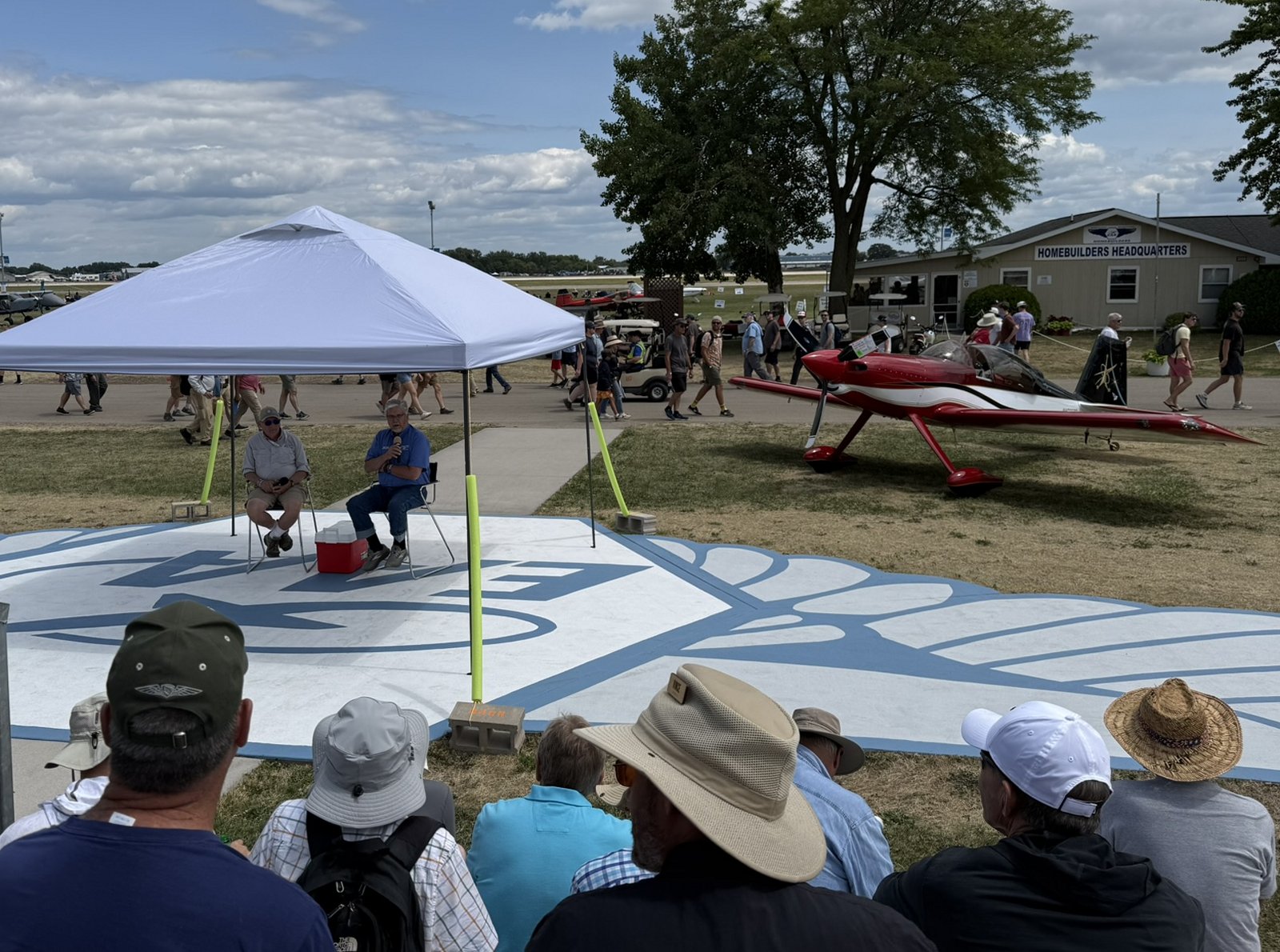
Later in the day, back at Hombuilts in Review, I listened to Paul Dye talk about his newly completed F-1 Rocket.
Interestingly, Dye says the Rocket outperforms his SubSonex jet.
|
| |
 |
|
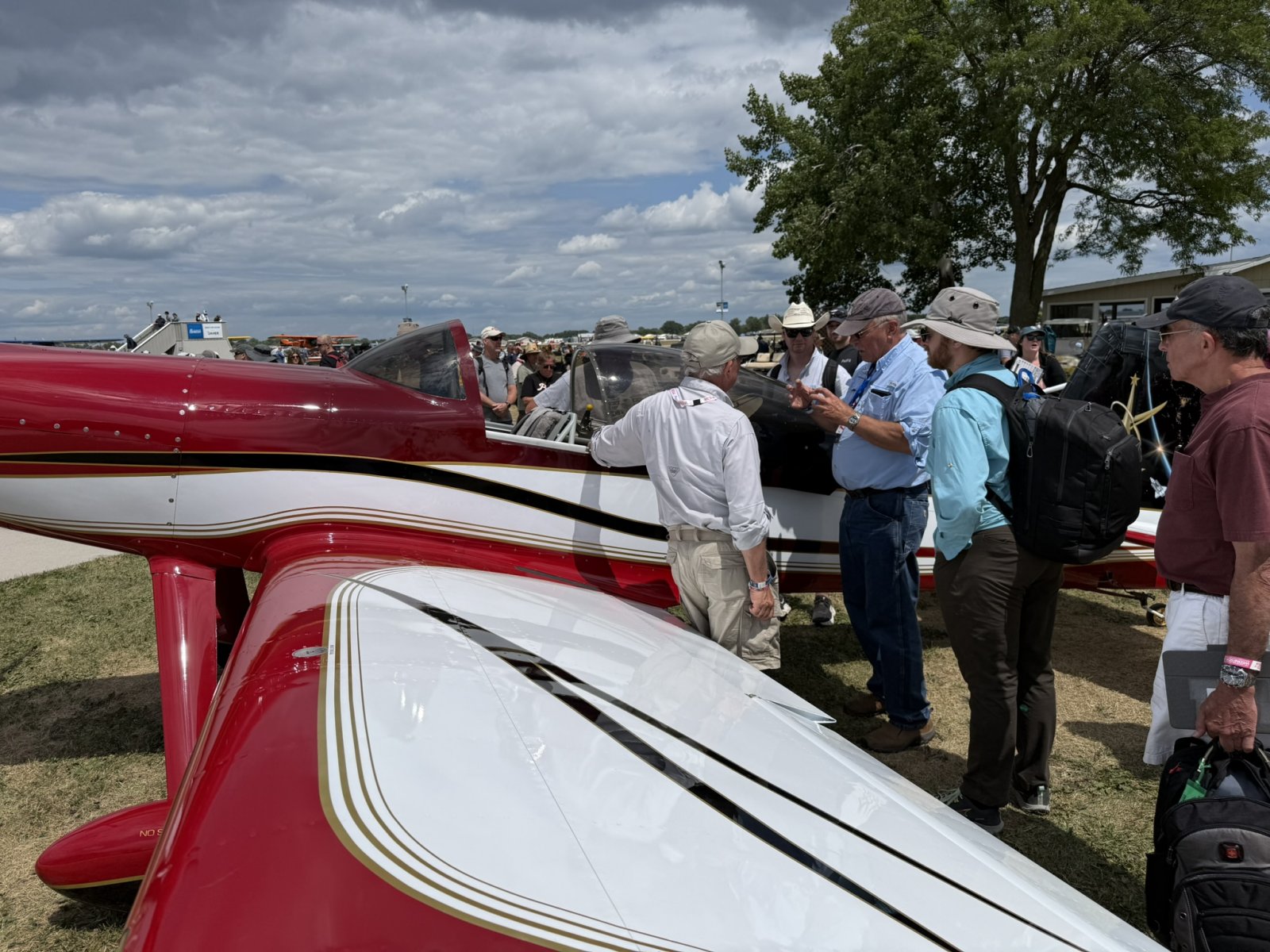
| After the presentation, Paul Dye answers questions about his F-1 Rocket. One of the features on it is a "taxi-cam": a little camera on the belly facing forward to help with taxiing since it's impossible to see straight ahead over the nose. |
| |
 |
|
|
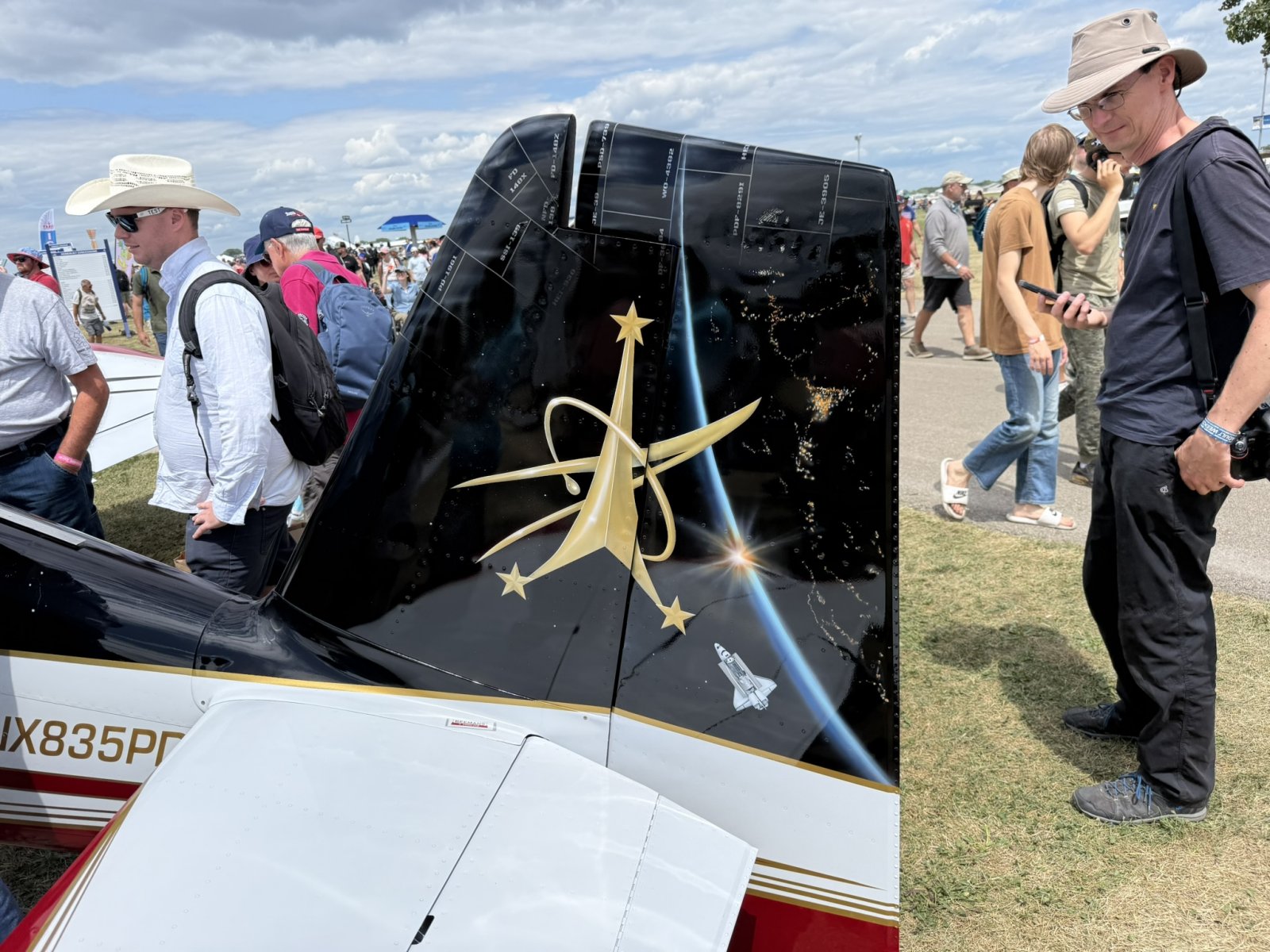
The logo on the vertical stabilizer is that of a NASA Flight Director which Paul Dye was for many years.
|
| |
 |
|
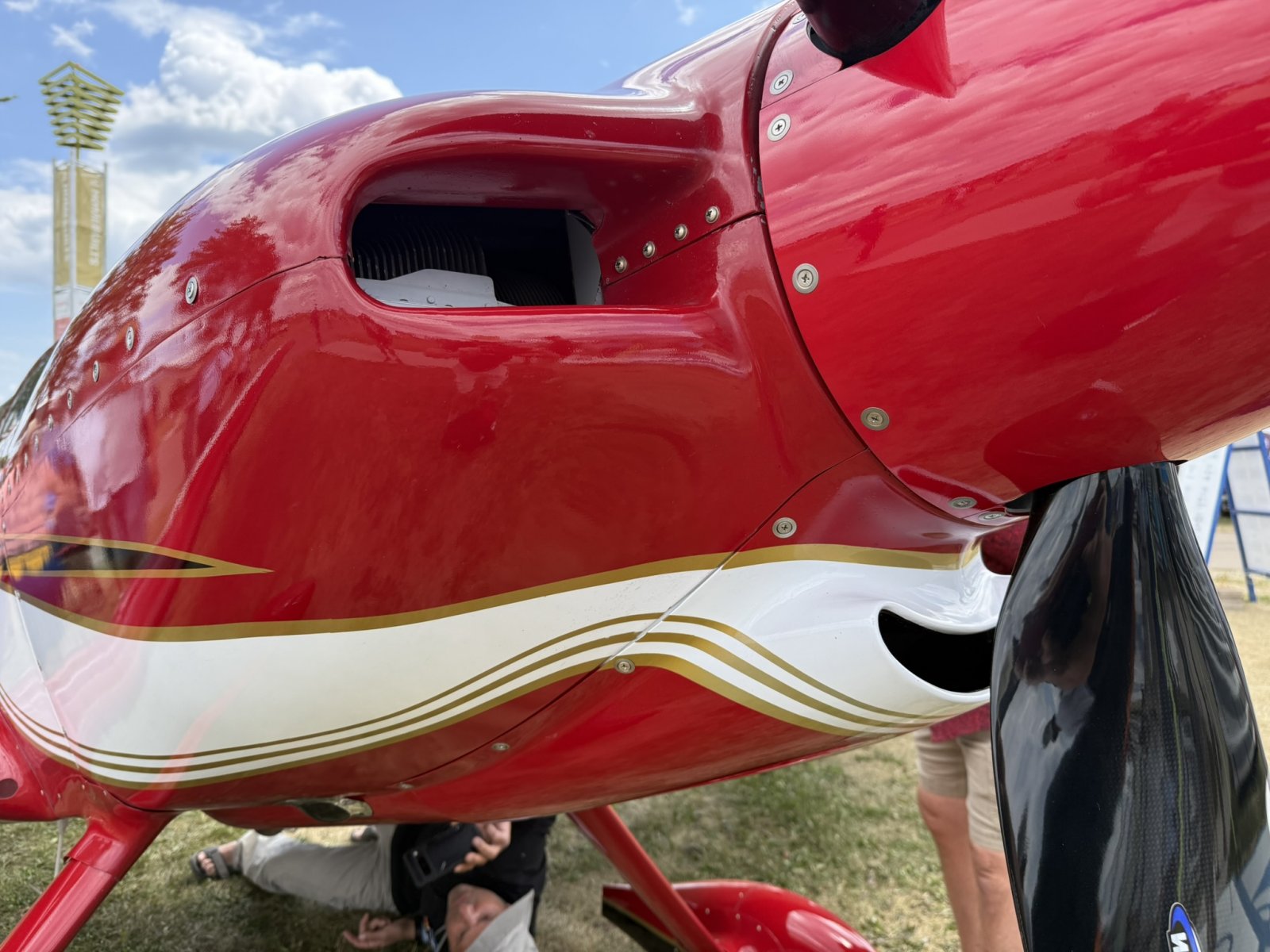
| Another interesting innovation was the removal, center-lower cowl, which made it possible to inspect most of the engine stuff without having to take off the entire cowl. Nice! |
| |
 |
|
|
I started Thursday out by attending a presentation on Mosiac by Tom Charpentier and came away with a much better understanding of that less than a year old program. Tom is the EAA's Government Relations Director and represents EAA and the general aviation community on issues of FAA regulatory policy.
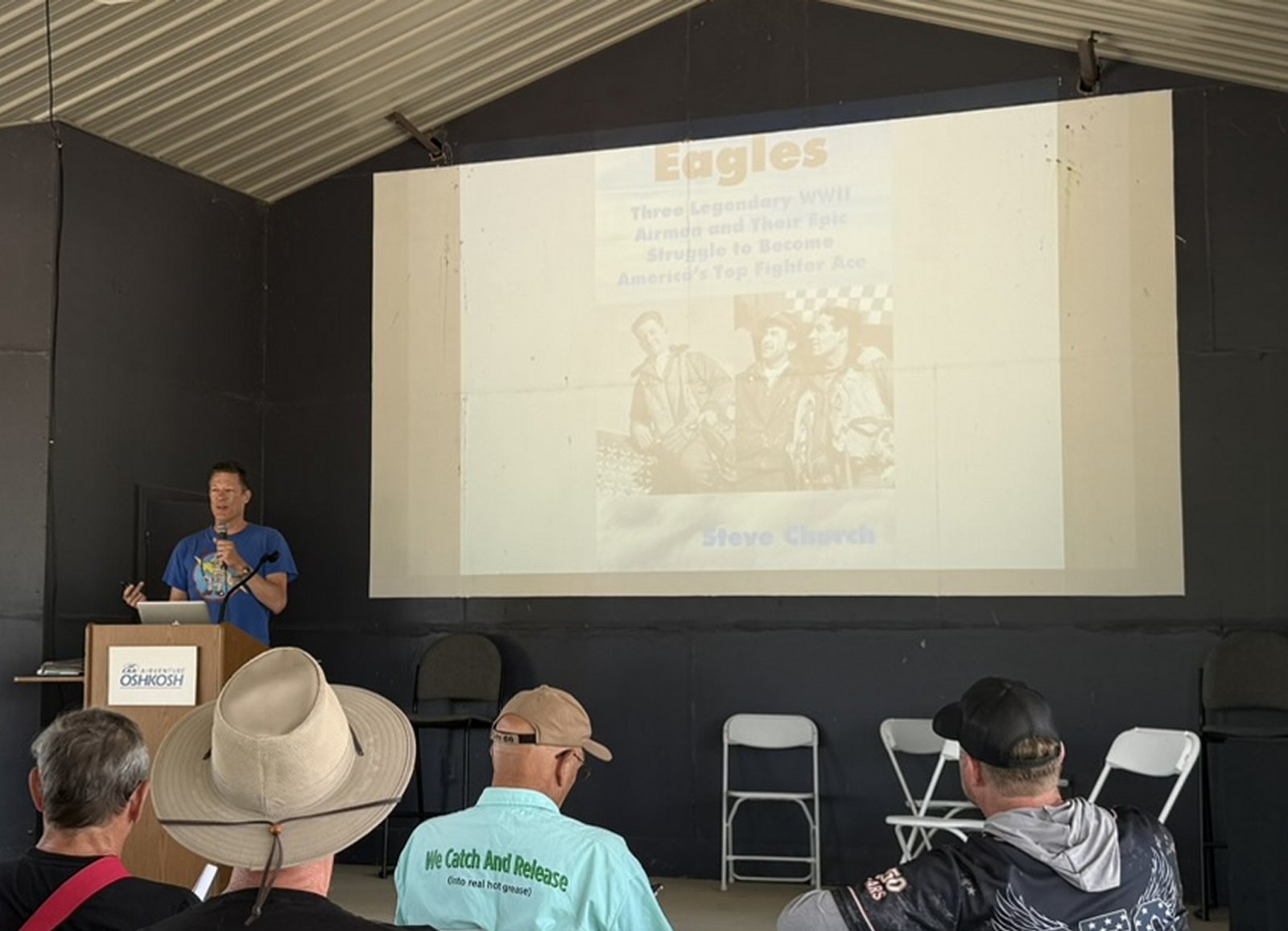
Then I listened to Steve Church's presentation on Fighter Combat in WWII. It was outstanding. I have read a lot of books on aerial combat, especially in World War II and everything Steve said rang true. Furthermore, he made many points I was hearig for the first time. I also ended up in buying Steve's book! Although Steve was not an ex-military fighter pilot, he has first-hand experience of fighter combat maneuvers due to over 1,000 1 v 1 dogfights in his RV-4!
|
| |
 |
|
|
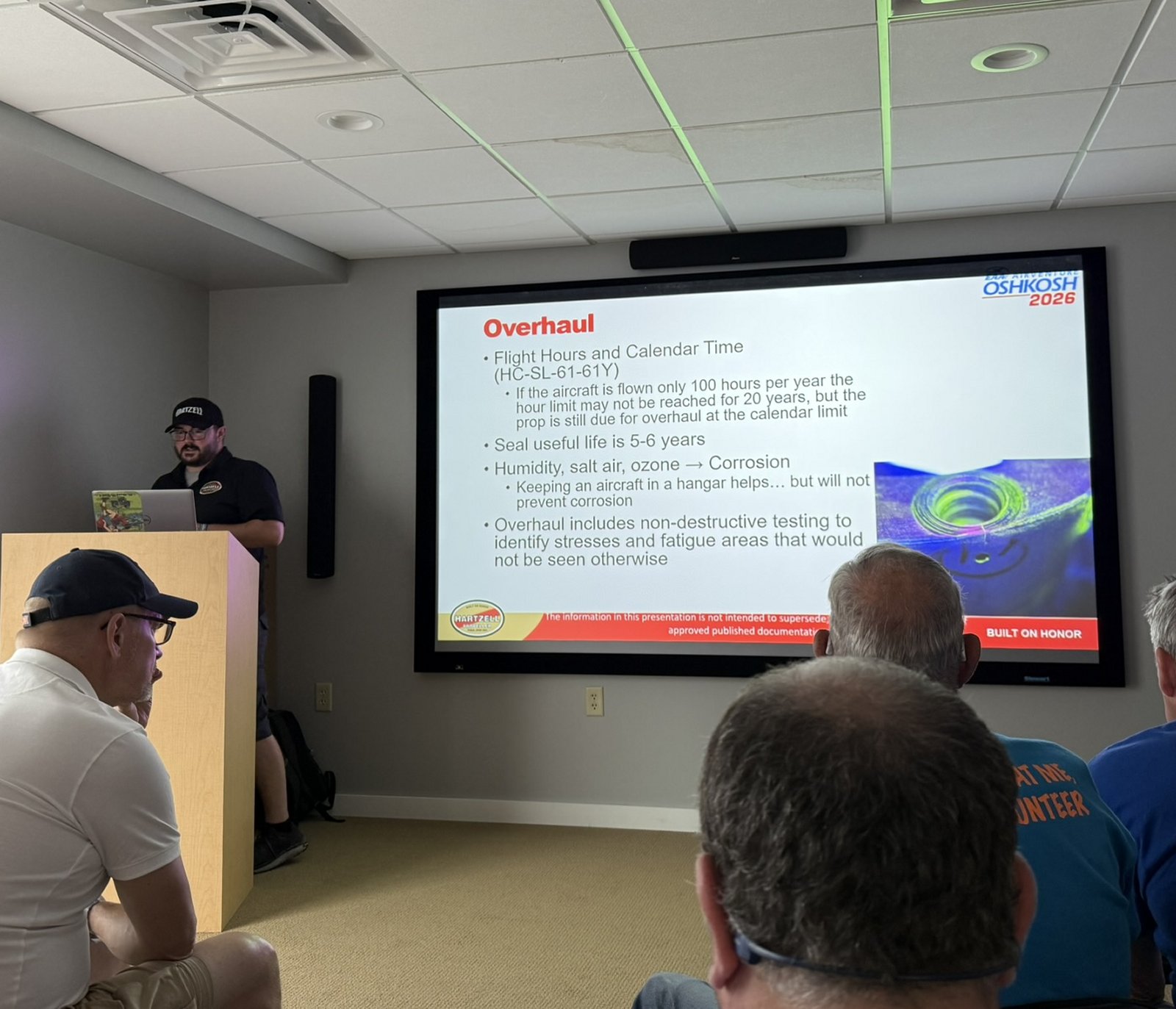
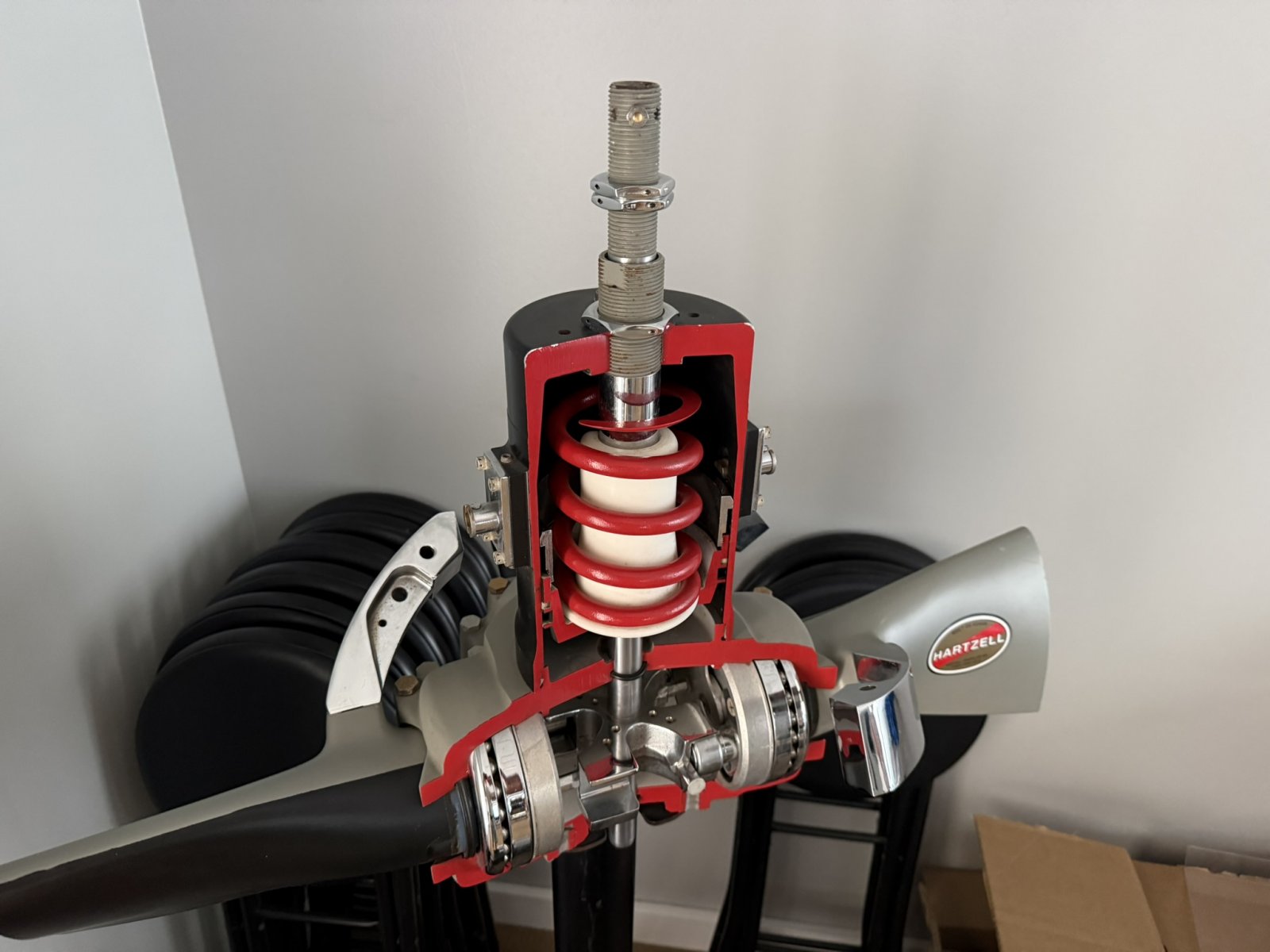
I went over to the Hartzell booth and caught a presentation on Maintenance and Care of your Hartzell Propeller. I have the Hartzell Blended Airfoil propeller on my RV-7. Good brief.
Hartzell now offers a composite Blended Airfoil prop for RVs (as opposed to my aluminum blended airfoil).
|
| |
 |
|
|
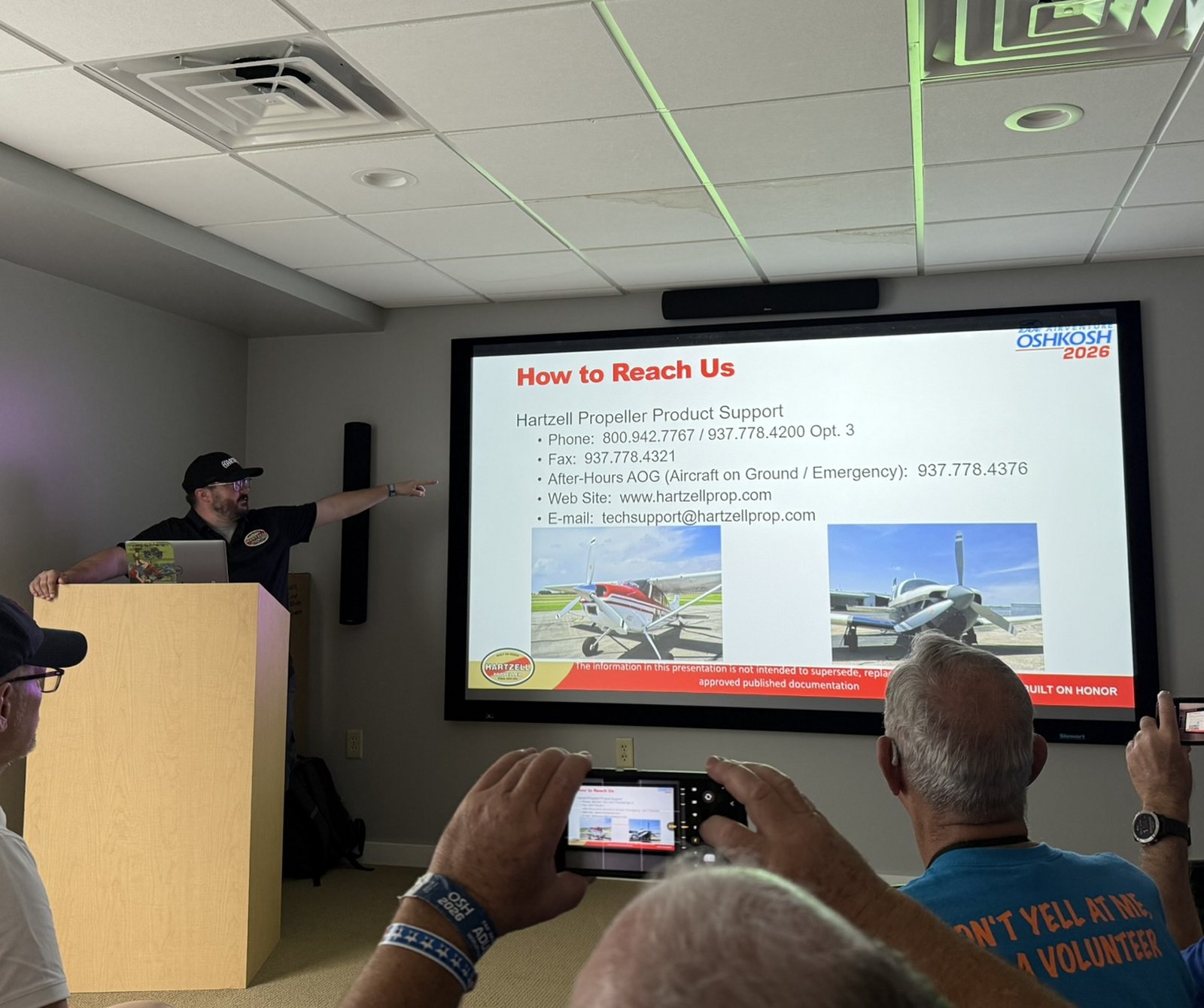
The Hartzell propeller technical supporters are very accessible.
|
| |
 |
|
|
I've always wondered what was inside the prop hub and now I know.
|
| |
 |
|
|
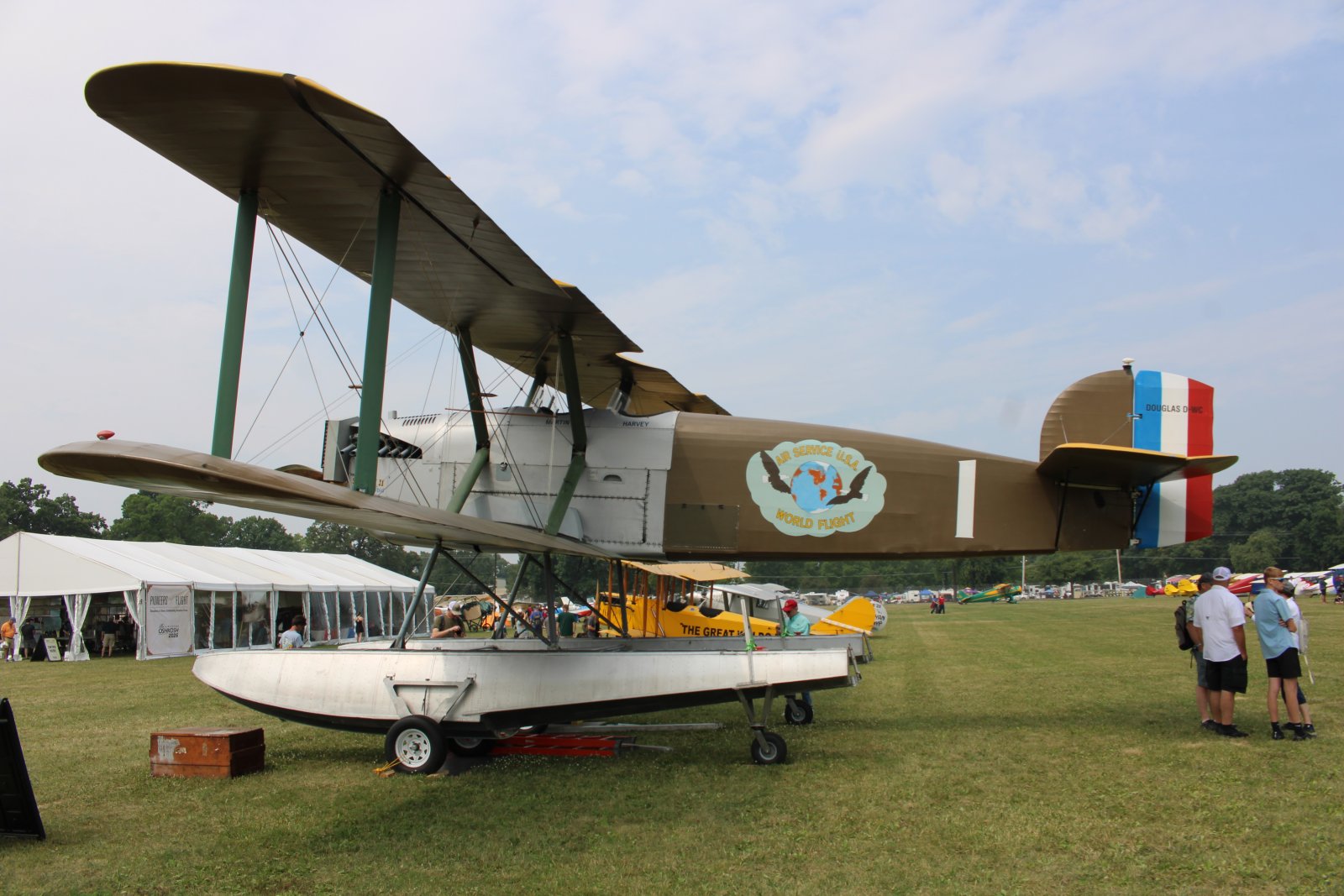
The 1924 Douglas World Cruiser replica over in the Pioneers of Flight Area had peaked my interest so Thursday afternoon I attended a presentation by Bob Dempter who spearheaded the effort to build the replica.
The Douglas World Cruiser was the first aircraft to circumnavigate the globe. For a great article describing the around the world flight and the building of the replica, go Here.
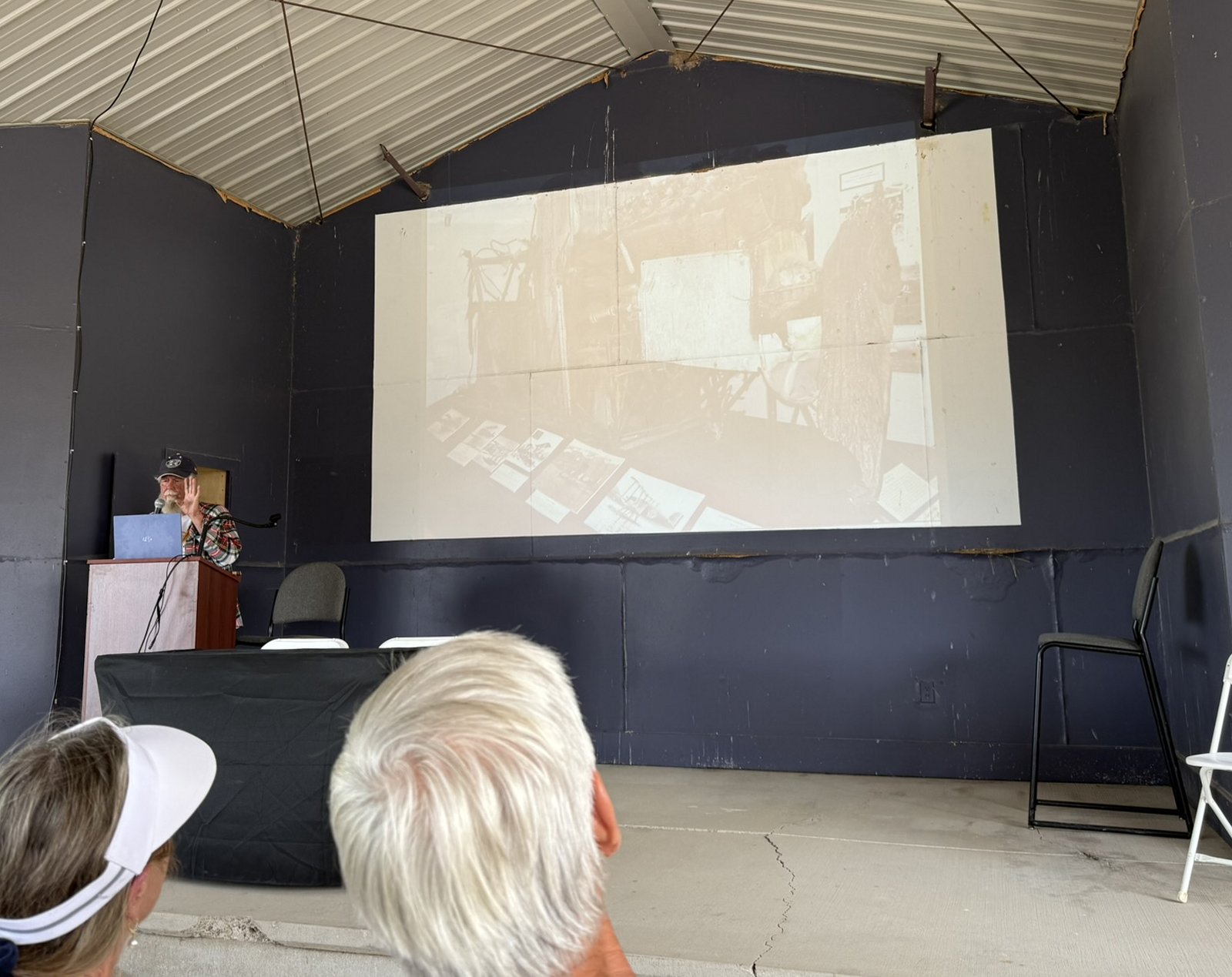
Unfortunately, Bob's slide show was barely visible.
The project started in 2001. First flight was in 2015. The Seattle 2 replica is powered by the same type of engine that powered the original Cruisers; a 400 HP Liberty V-12.engine. Many consider the engine to be the most important contribution the United States made to aviation technology during World War I. The engine also powered the first aircraft to cross the Atlantic, the Curtiss NC-4, and the first plane to make a nonstop flight across the U.S. a Fokker T-2.
|
| |
 |
|
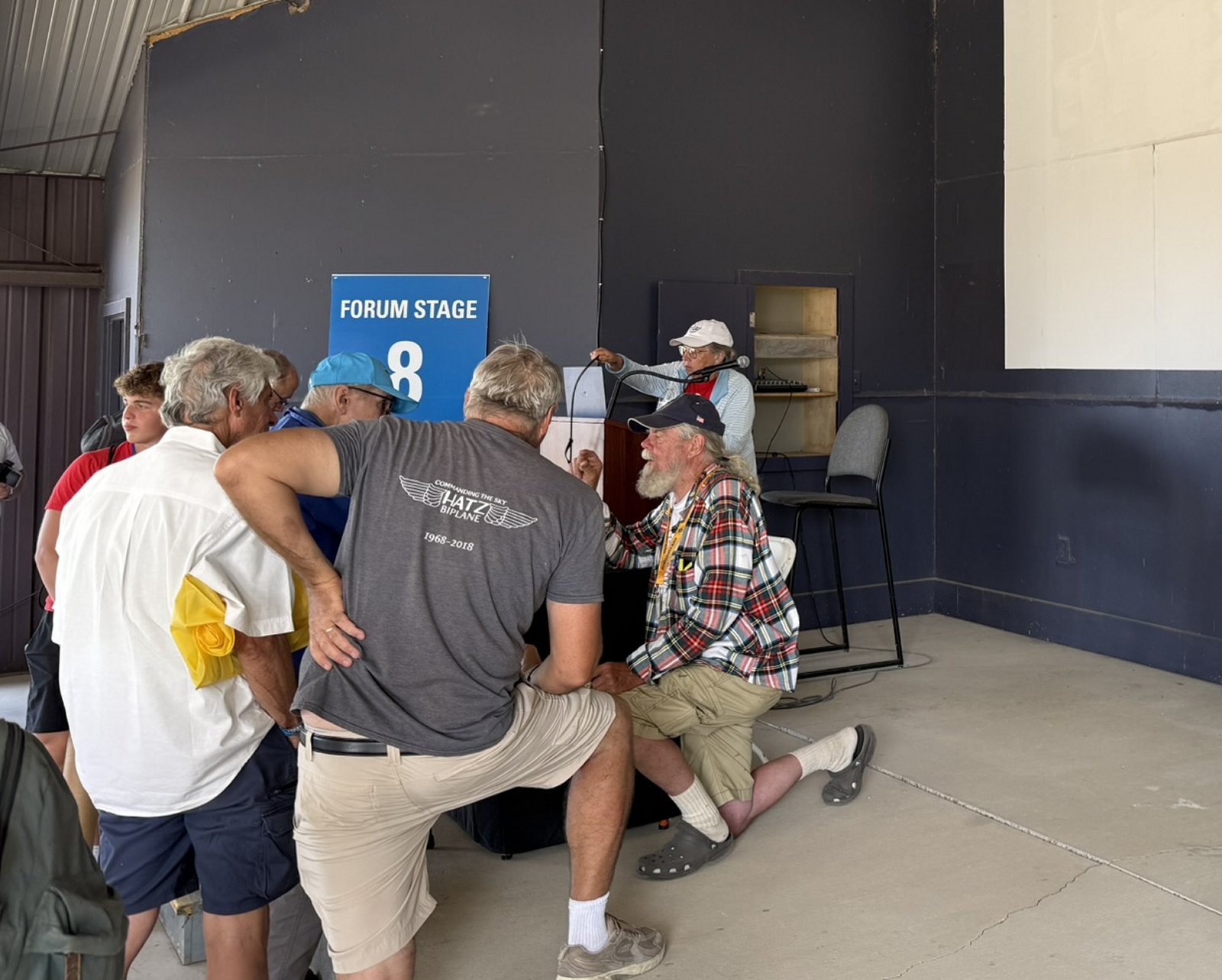
| Bob has the audience riveted! The project was started in a coffee shop. |
| |
 |
|
| The Douglas World Cruiser -- Seattle II -- replica in the Pioneers of Flight Area. |
| |
 |
|
|
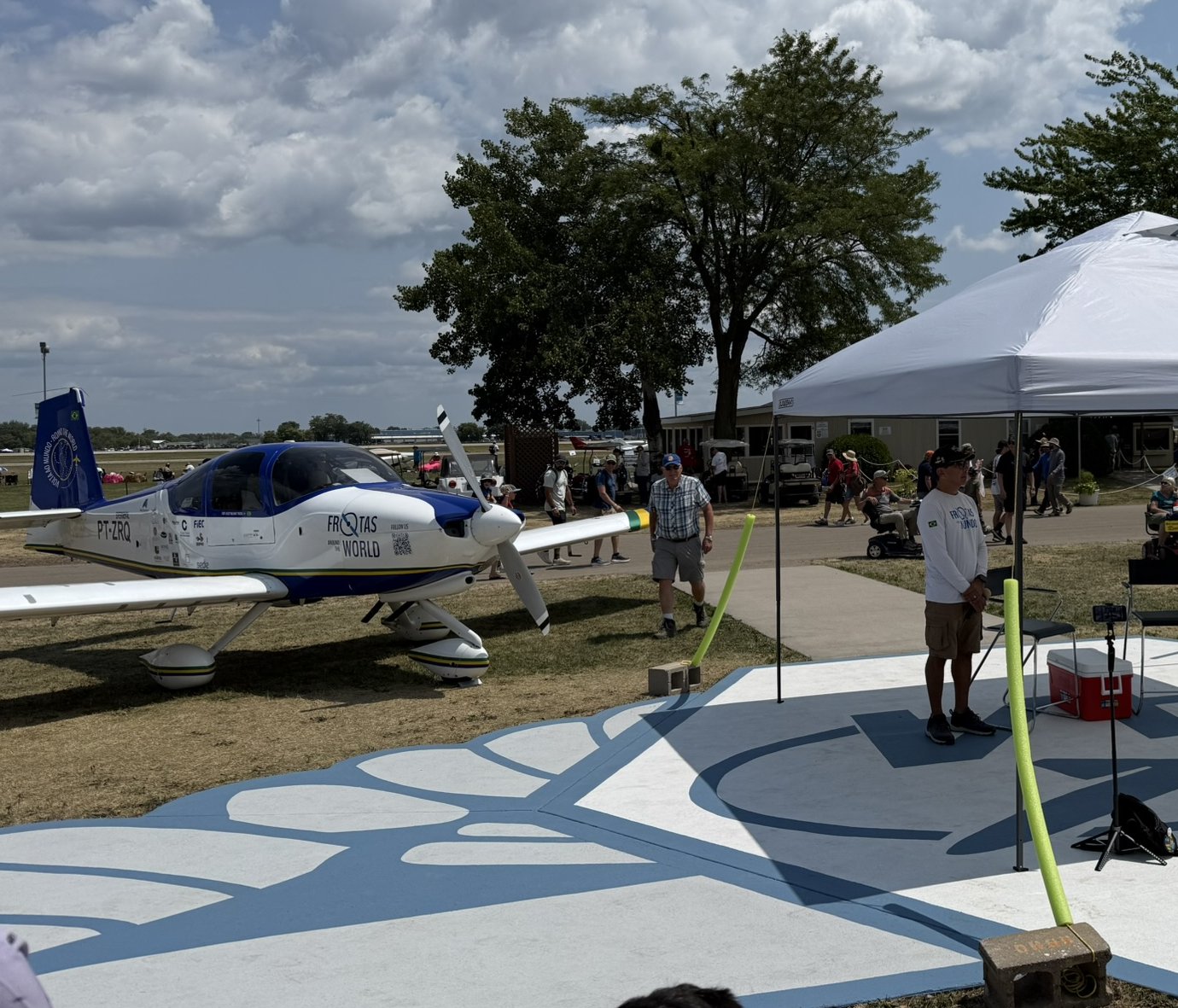
Speaking of around the world flights, on Friday I attended Homebuilts in Review to learn about Alex Frotas's around the world flight in his RV-10.
|
| |
 |
|
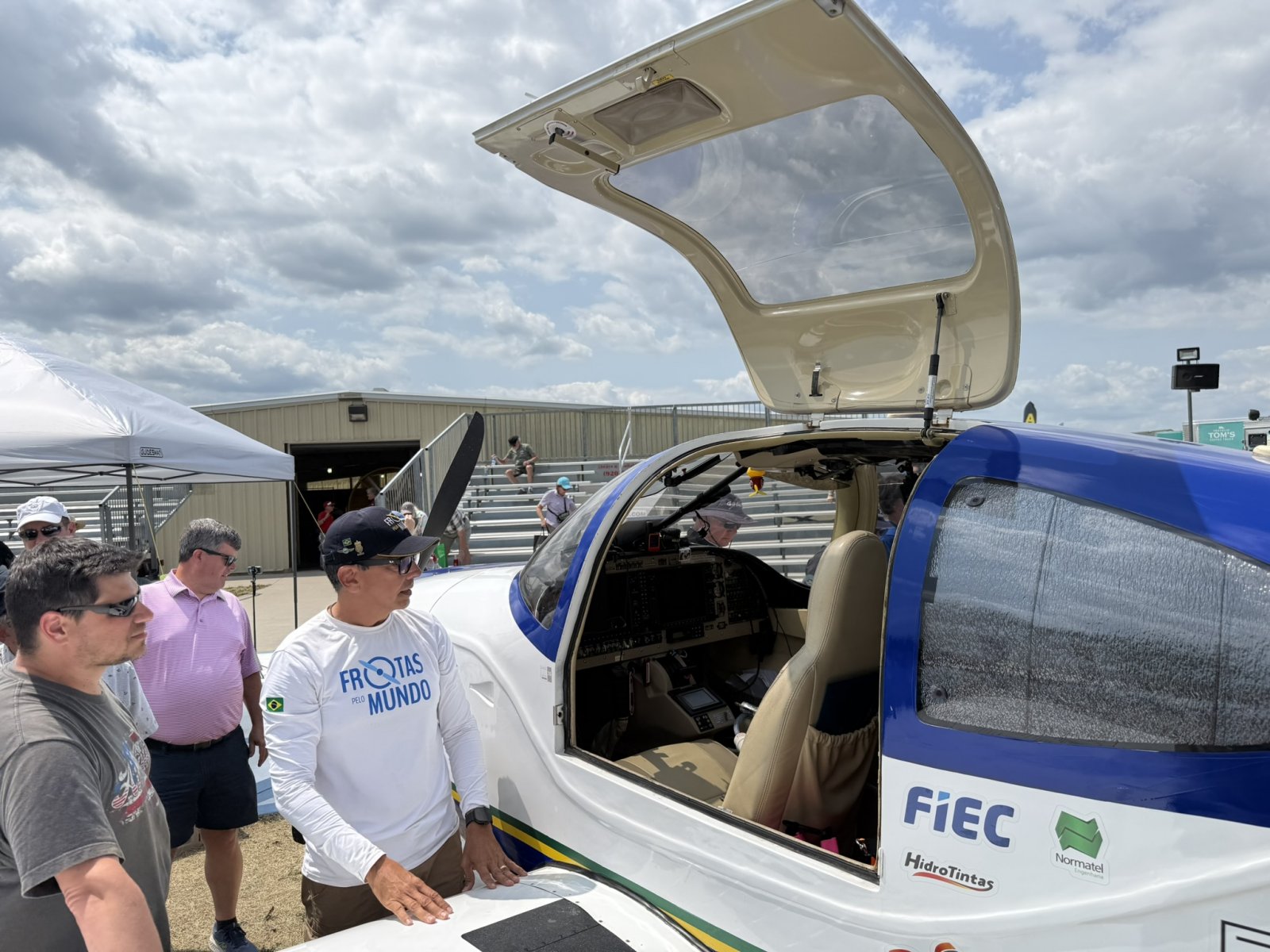
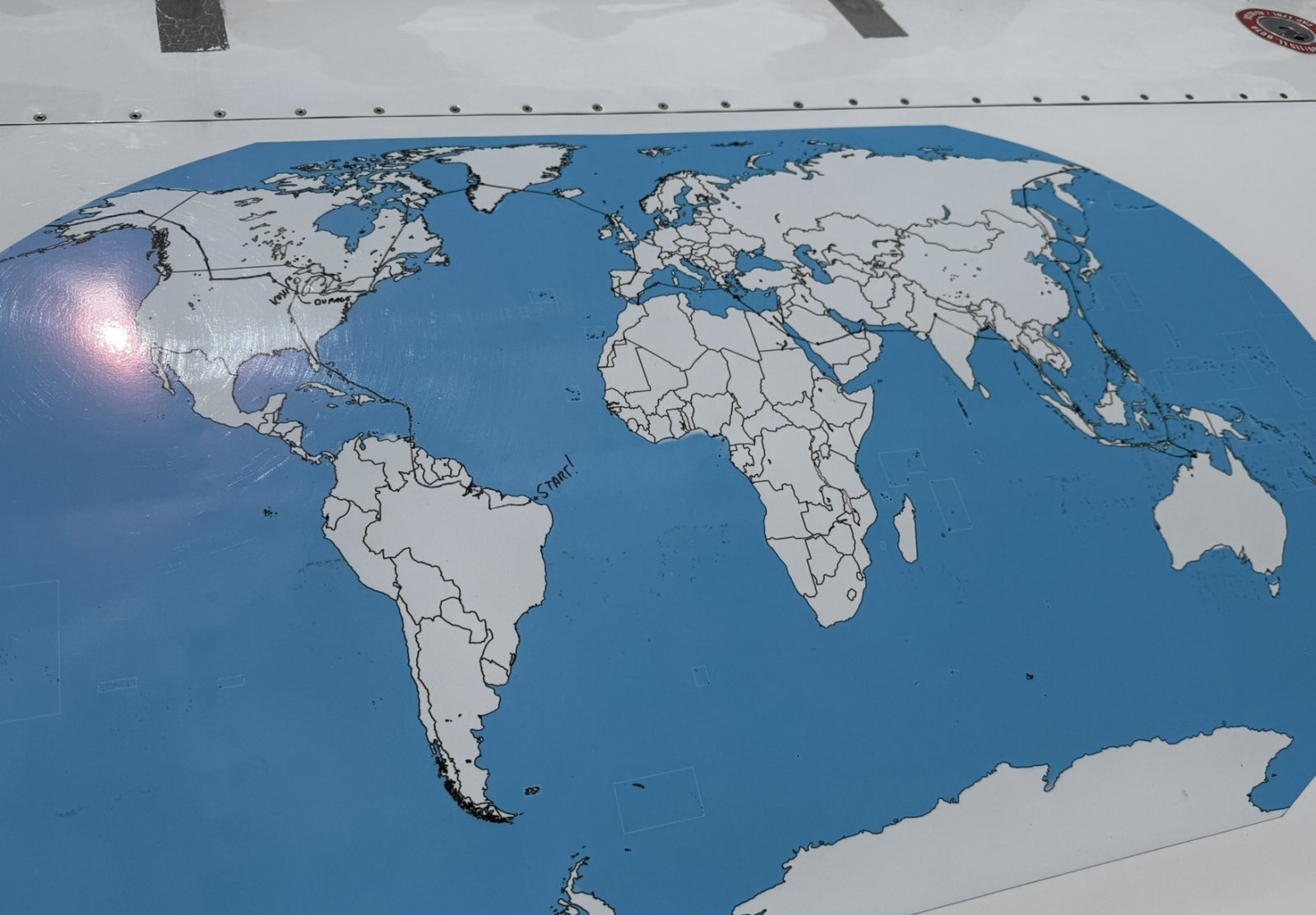
| Alexandre Frotas departed on March 15 to fly around the world in an RV10, from Brazil. He headed up to Oshkosh, then over to Europe, southeast to Australia, north to Russia, east to Alaska, and back to Oshkosh. It took 91 days and 300 hours of flying time. |
| |
 |
|
|
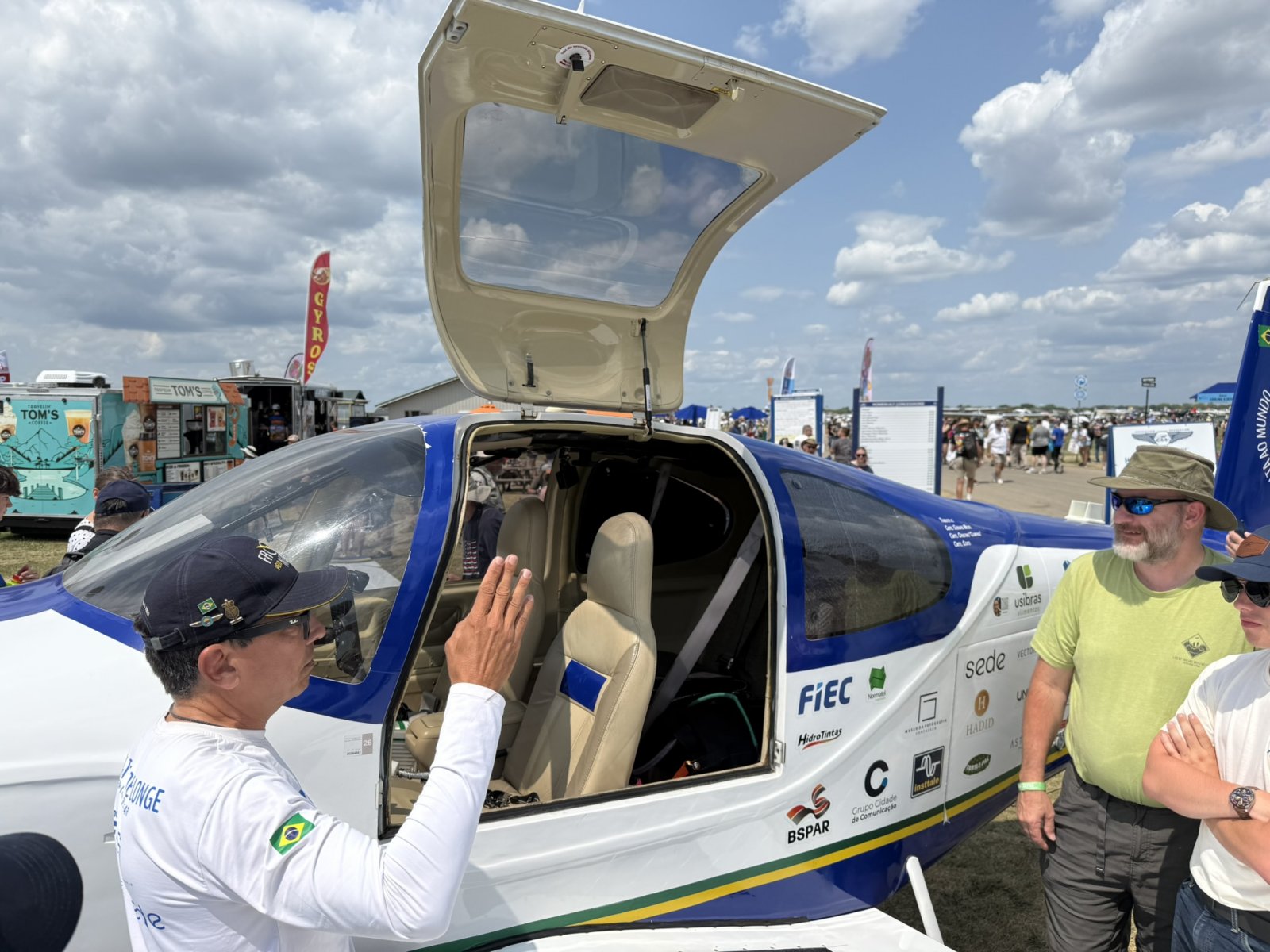
It's hard to see here but Alex has fuel bladders where the rear seats normally are. His modified RV-10 holds an amazing 180 gallons of avgas.
|
| |
 |
|
|
This map is on the RV-10's right wing.
After Oshkosh, Alex is flying the perimeter of South America before heading back to his starting point in Brazil.
When asked if he would do the trip again, he immediately and emphatically said "No!". The biggest challenge and frustration of the trip was dealing with the bureaucracy.
|
| |
 |
|
| |
| |
|
|
|
|
|
|